
With rising temperatures and a projected 30% increase in electricity bills by June 2026, Ohio homeowners are feeling the strain of cooling their homes this summer. Many are turning to solar energy as a smart, long-term solution, but buying solar panels can still be too costly for some families. That’s why solar leasing is becoming popular. If you want to know what solar leasing is and if it could work for your home, this guide will help.
With a solar lease, you can have solar panels on your home without buying them. You pay a set monthly fee, while the provider handles installation and maintenance. This means you can start saving on your electricity bills right away, often with little or no upfront cost.
Start saving on electricity from day one. Learn more about solar leasing and how it can benefit your home.
Key Overview
- Solar leasing allows you to get solar panels with no upfront cost and a fixed monthly fee.
- You sign a lease, pay a monthly fee, and enjoy solar power with no maintenance responsibility.
- Solar leasing offers no upfront costs, predictable payments, and a hassle-free solar solution.
- A third-party company owns the solar panels, and long-term savings are typically lower than buying.
- Solar leasing is ideal for homeowners who want low-cost, maintenance-free solar energy without a large upfront investment.
What Is Solar Leasing?
Many homeowners ask, what is solar leasing, and how is it different from buying solar panels or taking a loan? Simply put, a solar lease allows you to go solar without ownership responsibilities.
Solar leasing is a financing arrangement where a solar company installs panels on your home and you pay a fixed monthly fee to use the electricity they generate. The company retains ownership of the system throughout the lease term.
In Ohio, solar leasing has become one of the most popular solar financing options for homeowners who want to reduce rooftop solar costs without a big upfront commitment.
If you're considering solar leasing, explore how this flexible financing option can help you save on energy costs without the need for ownership.
How Does a Solar Lease Work?
To better understand what is solar leasing, it helps to break down how a typical solar lease works step by step:
- You sign a lease agreement with a solar provider, typically for 20–25 years.
- The provider handles the full installation of solar panels on your roof at no or minimal upfront cost to you.
- Once the system is live, it generates electricity for your home.
- You pay a fixed monthly lease payment (usually lower than your current electric bill).
- The provider is responsible for all maintenance, repairs, and monitoring throughout the lease term.
- At the end of the lease, you can renew, return the system, or in some cases, purchase it.
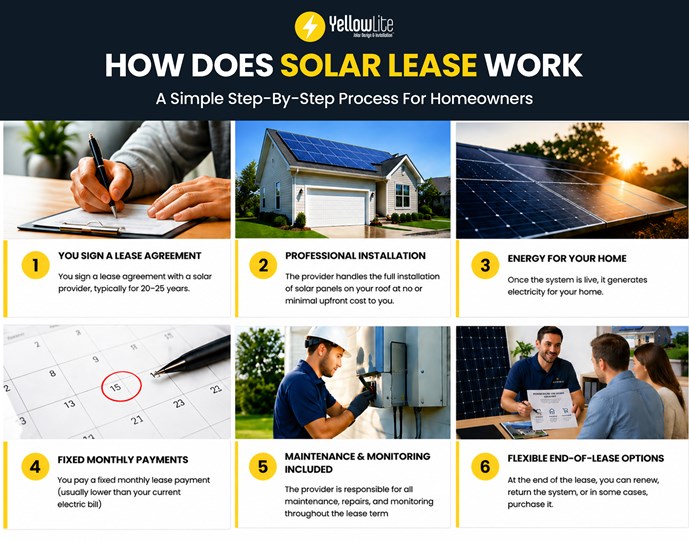
The key advantage is predictability. Your monthly payment is fixed, so you're protected from rising electric rates, a real concern in Ohio, where electricity prices have fluctuated drastically in recent years.
Benefits of Solar Leasing
Solar leasing offers several compelling advantages, especially for homeowners who want to go solar without making a large upfront payment.
Once you understand what is solar leasing, the benefits of choosing a solar lease become clear:
- No large upfront investment: Most leases require little to no money down, making solar accessible to more households.
- Predictable monthly costs: Your lease payment stays fixed, helping you budget without surprises.
- Maintenance-free solar: The provider takes care of repairs and monitoring so you don't have to worry about system performance.
- Faster path to solar energy: Skip the complex buying process and start saving on electricity sooner.
- Reduced dependence on the grid: Lower your monthly utility bill and your carbon footprint at the same time.
Potential Drawbacks of Solar Leasing
While a solar lease is convenient, it’s important to evaluate the limitations before deciding if solar leasing is right for you.
Like any financial arrangement, solar leasing has some limitations worth knowing before you sign:
- No system ownership: You don't own the panels, which means you miss out on the long-term equity of owning a solar asset.
- Lower long-term savings: Compared to buying panels outright, leasing typically results in less savings over time.
- Contract lock-in: Leases run 20–25 years. If you sell your home, you'll need to transfer the lease which can complicate the process.
Is Solar Leasing Right for You?
Solar leasing is a great fit for homeowners who:
- Have limited upfront budget but want to start saving on electricity now
- Prefer a hands-off, maintenance-free solar experience
- Plan to stay in their current Ohio home for several years
- Want to reduce their utility bills without a large financial commitment
- Are exploring solar for the first time and want a lower-risk entry point
How Much Can You Save with Solar Leasing?
Savings from solar leasing, or a typical solar lease, vary depending on your home's energy usage, roof size, local utility rates, and the specific lease terms you agree to. Generally, Ohio homeowners with a solar lease can expect their monthly electricity costs to decrease significantly.
While leasing doesn't offer the same long-term financial returns as ownership, many homeowners see immediate monthly savings from day one. Factors like your current electric rate and how much energy your roof can generate will determine your exact benefit.
For a detailed look at the numbers, explore our solar lease savings breakdown to understand exactly what you might save based on your home and usage.
Conclusion
Solar leasing is one of the most accessible ways for Ohio homeowners to start benefiting from solar energy without a large upfront investment. It offers predictable monthly payments, zero maintenance stress, and an immediate reduction in electricity costs.
It's not perfect for everyone; those seeking maximum long-term savings or full ownership may prefer buying. But for homeowners who want a simple, low-risk introduction to solar, leasing is a smart first step.
Ready to explore your options? Start by compare solar leasing vs buying panels to find the right fit for your home and budget. A trusted local solar provider like YellowLite can walk you through both paths and help you make a confident, informed decision.

Frequently Asked Questions (FAQs)
Q1. What is solar leasing and how does it work?
If you're wondering what is solar leasing, it’s essentially a solar lease agreement where a provider installs and owns the solar panel system while you pay a fixed monthly fee to use the energy generated. The company owns and maintains the system throughout the lease term typically 20–25 years.
Q2. What is the cost of solar leasing?
The cost of solar leasing typically involves a fixed monthly payment, which varies based on the size of the system and your location. In many cases, there’s little to no upfront cost, making it an affordable option to access solar energy.
Q3. What are the pros and cons of solar leasing compared to buying solar panels?
Solar leasing has low upfront costs and maintenance included but lacks ownership and long-term savings. Buying offers full ownership, better savings, and increased home value but requires higher upfront costs and maintenance.
Q4.Can I buy the solar system after leasing it?
Many solar lease agreements include a purchase option, allowing you to buy the system at the end of the lease or at set intervals. The buyout price depends on your specific contract terms. Always review this clause before signing a lease.
Q5. Is solar leasing a good deal?
Solar leasing is a good deal for homeowners seeking low upfront costs, predictable payments, and maintenance-free energy, but buying solar panels offers greater long-term savings and ownership benefits.