
Rising electricity costs are squeezing manufacturers' operating margins, pushing businesses to explore every avenue for efficiency. With utilities hiking rates unpredictably and energy-intensive operations consuming massive amounts of power, manufacturers are looking for solutions that deliver long-term savings. Increasingly, solar for manufacturing is emerging as a strategic choice.
Solar panel installation offers industrial facilities a reliable way to reduce electricity expenses, stabilize energy costs, and strengthen sustainability performance.
Why Energy Costs Are a Major Challenge for Manufacturers
Manufacturing facilities often consume enormous amounts of electricity. From powering industrial machinery and lighting expansive factory floors to running climate control systems, utilities represent a significant portion of operational expenses. Rising energy costs directly impact manufacturing energy costs and can erode profit margins, making it harder to remain competitive.
High-energy equipment, continuous production cycles, and large-scale heating, cooling, and ventilation demands make factories some of the most electricity-intensive businesses. Industrial processes like metal fabrication, food processing, and packaging often run 24-7, driving up energy bills substantially.
How Solar Panels Help Manufacturing Facilities Reduce Costs
Solar panels for manufacturing can offset a large portion of a facility's electricity consumption. By generating on-site renewable energy, factories can significantly reduce monthly utility bills, protect against unpredictable rate increases, and enjoy more predictable operational costs. Over time, these savings compound into meaningful reductions in total energy spend.
On-site solar generation can reduce electricity bills by 20-80%, depending on facility size, energy usage patterns, and system design. In many cases, the payback period for a solar project can be as short as 4-6 years, after which energy savings contribute directly to improved profitability.
Key Benefits of Solar for Manufacturing Businesses
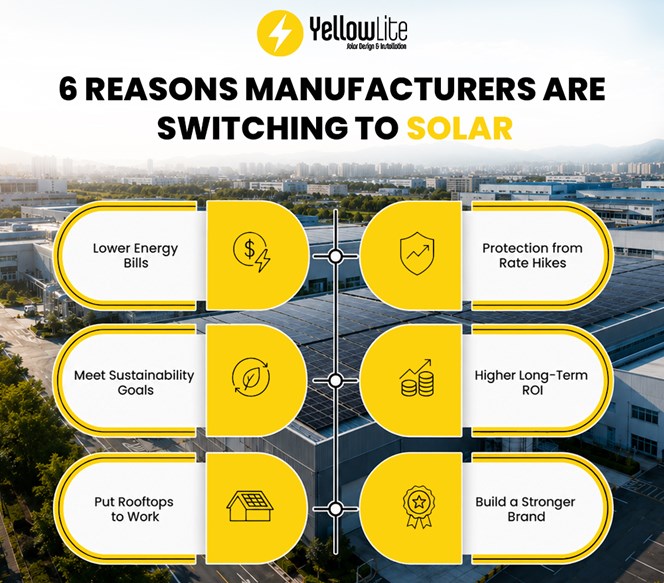
- Significant Energy Cost Savings: Installing solar panels on industrial buildings allows manufacturers to cut electricity bills dramatically. Lower utility costs free up capital that can be reinvested in production, equipment upgrades, or workforce expansion.
- Protection Against Rising Utility Rates: Solar provides a hedge against fluctuating energy prices. Once installed, energy costs become more predictable, reducing exposure to utility rate volatility.
- Improved Sustainability Performance: Solar energy supports corporate sustainability goals, helping manufacturers meet internal targets, investor expectations, and regulatory requirements. Demonstrating green initiatives can also strengthen relationships with environmentally conscious clients.
- Better Long-Term ROI: High upfront costs are often offset by long-term energy savings and financial incentives, including tax credits and accelerated depreciation. Solar ROI for manufacturers typically exceeds many alternative efficiency investments.
- Utilization of Large Rooftop Space: Factory rooftops and warehouse spaces are often underutilized. Solar panels turns these areas into productive assets, generating energy on-site without taking up additional land.
- Enhanced Brand Reputation: Adopting renewable energy positions manufacturers as forward-thinking and responsible, which can enhance brand reputation and attract sustainability-minded customers or partners.
Solar Panels Installation for Manufacturing Facilities
Installing solar for manufacturing facilities involves a structured process:
- Site Assessment: Experts evaluate roof condition, available space, shading, and electrical infrastructure.
- System Design: Engineers design a system optimized for energy output, operational efficiency, and integration with existing systems.
- Installation Process: Panels, inverters, and racking are installed, often with minimal disruption to manufacturing activities.
- Commissioning: Systems are tested, grid-connected, and configured for performance monitoring.
- Ongoing Monitoring: Continuous tracking ensures energy production meets projections and maintenance needs are addressed proactively.
Solar Financial Incentives Available for Manufacturers
Manufacturers can leverage several financial programs to improve solar project economics:
- MACRS Depreciation: Accelerated depreciation allows manufacturers to deduct system costs over 5 years, improving cash flow.
- State and Utility Incentives: Many states and local utilities offer rebates, grants, or performance-based incentives for industrial solar installations.
What Types of Manufacturing Facilities Benefit Most from Solar?
High-energy-use industries see the strongest returns on solar investments. Examples include:
- Automotive Manufacturing: Assembly lines and heavy machinery are energy-intensive.
- Food Processing Plants: Refrigeration and continuous processing drive electricity demand.
- Packaging Facilities: High-volume operations with large equipment footprints.
- Warehouses and Distribution Centers: Lighting and HVAC demand is high over vast spaces.
- Metal Fabrication Facilities: Energy-heavy machining and finishing processes.
- Plastics and Chemical Manufacturers: Continuous process energy needs make solar highly valuable.
Solar panels deliver rapid ROI in facilities with consistent, high daytime electricity consumption.
Is Solar a Good Investment for Manufacturers?
Manufacturers can typically expect ROI within 4-7 years, depending on project size, incentives, and energy usage. Beyond cost savings, solar energy improves energy independence, supports sustainability commitments, and offers a competitive advantage in an increasingly eco-conscious market.
With predictable energy costs, substantial tax incentives, and long-term savings, solar panels provide a financially and operationally sound investment for manufacturers.
Conclusion
As energy costs continue to rise, manufacturers need practical solutions to protect profitability. Solar panels installation offers tangible benefits: reducing operational expenses, improving sustainability performance, and delivering attractive long-term ROI. Coupled with federal and state incentives, solar energy for factories is no longer just an environmental choice, it's a strategic business decision.Whether you're exploring solar for manufacturing facilities or evaluating your next energy-saving initiative, YellowLite can help design a commercial solar solution tailored to your facility's energy needs and business goals.
FAQ
Q1. How much can manufacturers save by installing solar panels?
Manufacturing facilities can reduce electricity costs by 20–80%, depending on system size, energy consumption, and local utility rates. These savings help lower operating expenses, improve cash flow, and provide protection against future energy price increases.
Q2. What is the typical payback period for solar panels in manufacturing facilities?
Most manufacturers recover their solar investment within 4–7 years, thanks to energy savings and available incentives. After the payback period, the electricity generated can significantly reduce long-term operating costs and improve overall profitability.
Q3. Can solar panels power an entire manufacturing facility?
Solar panels can offset a substantial portion of a factory’s electricity needs, though complete energy independence depends on energy usage, available installation space, and battery storage. Many facilities combine solar with grid power for optimal reliability.
Q4. Are there financial incentives available for manufacturers installing solar?
Yes. Manufacturers may qualify for incentives such as MACRS accelerated depreciation, state rebates, and utility programs that reduce project costs and improve return on investment. Eligibility varies by location and should be reviewed during project planning.
Q5. Will installing solar panels disrupt manufacturing operations?
In most cases, solar panel installation is carefully planned to minimize disruption. Experienced installers coordinate around production schedules, and much of the work takes place on rooftops or unused areas, allowing facilities to continue normal operations.