A
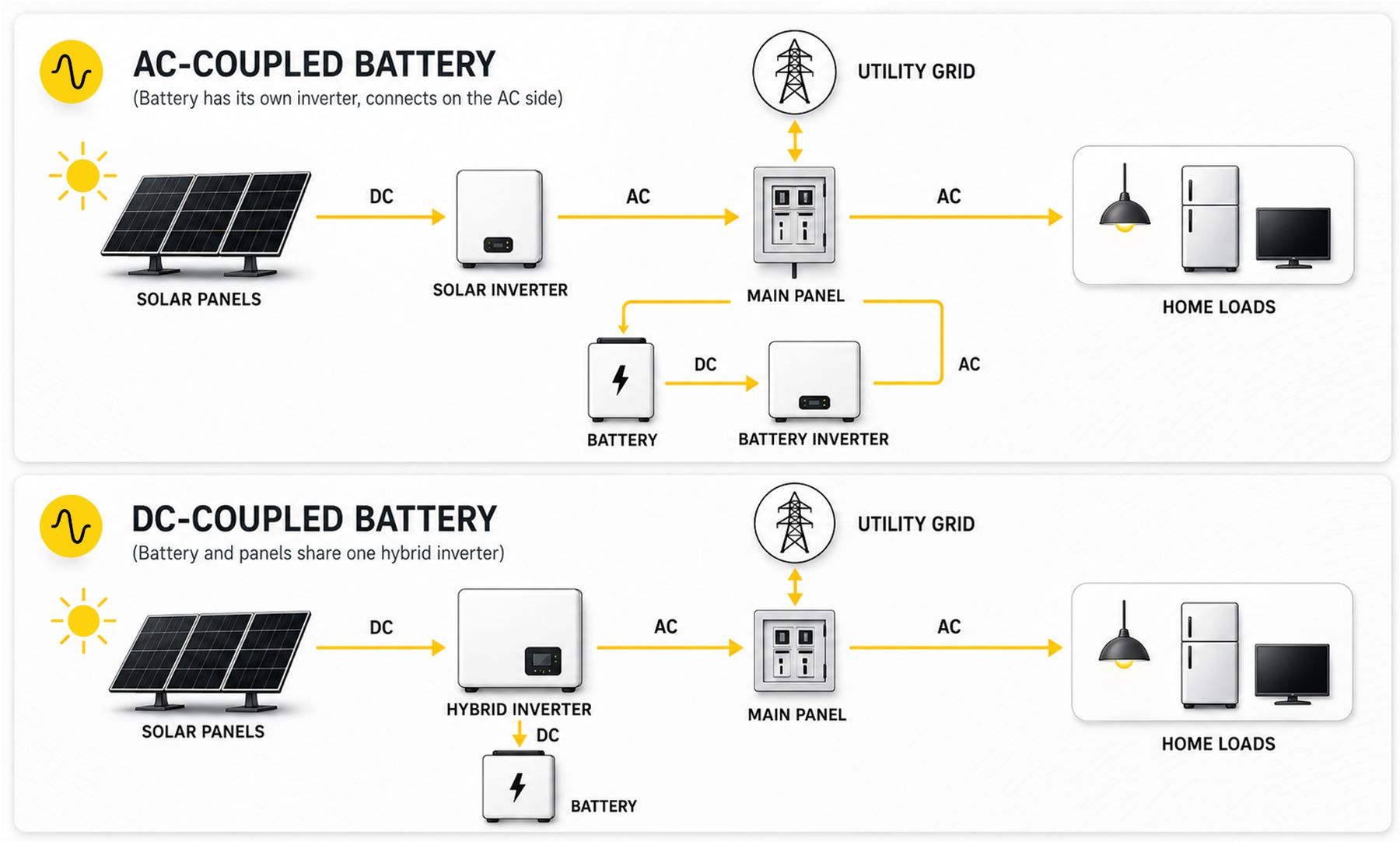
AC-Coupled Battery
A battery storage system that connects to a solar array on the AC side, using its own inverter. AC coupling makes it easy to add batteries like FranklinWH or Tesla Powerwall to existing solar systems.
Anti-Islanding
A safety feature that automatically shuts down a grid-tied solar system during a power outage. It prevents solar electricity from flowing into de-energized utility lines, protecting workers repairing the grid.
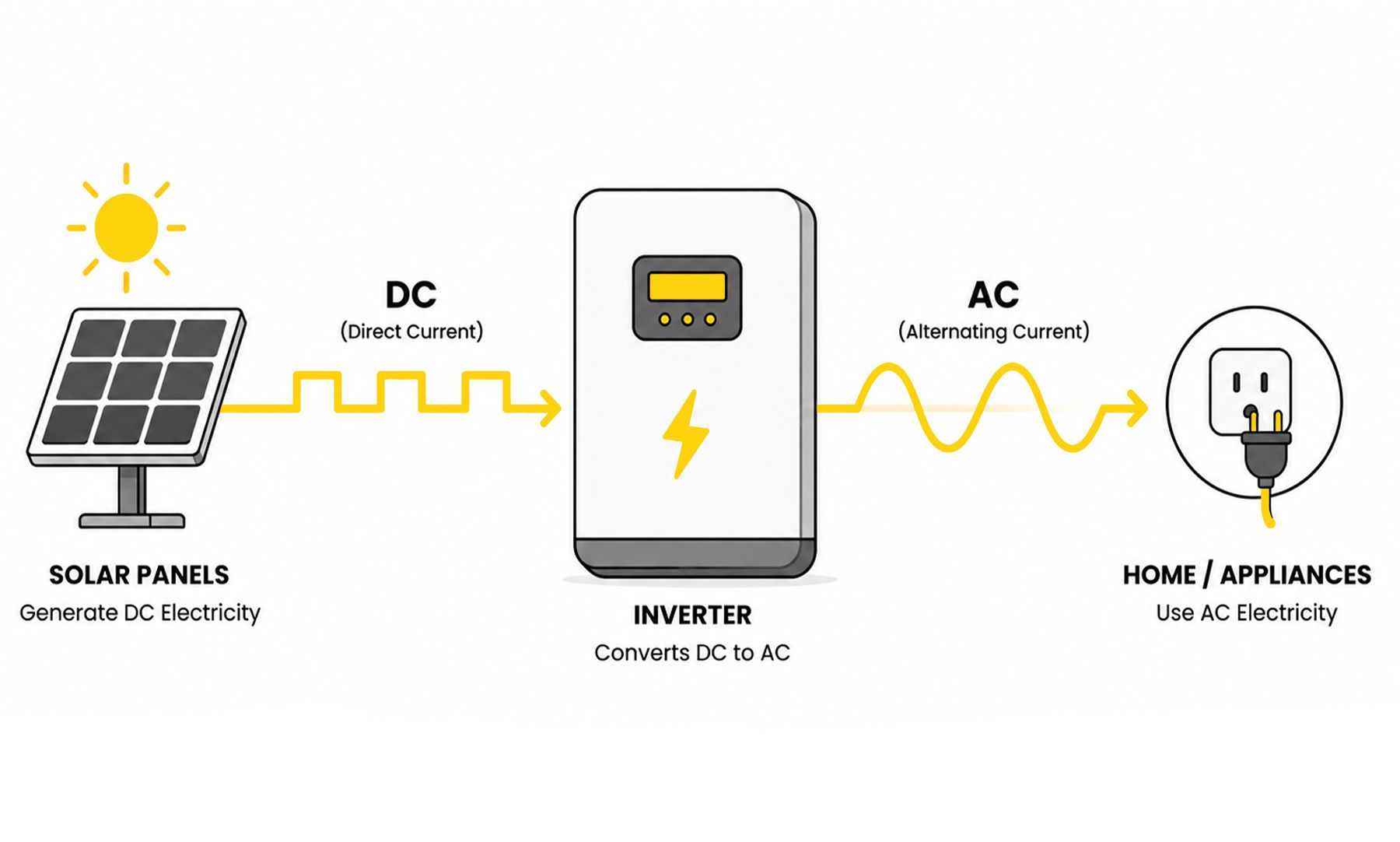
Alternating Current (AC)
The type of electricity used by homes, appliances, and the utility grid. Solar panels produce DC power, which an inverter converts into AC so it can safely power your home.
Azimuth
The compass direction a solar array faces, measured in degrees. In Ohio and the Midwest, a south-facing azimuth of about 180 degrees typically delivers the highest year-round solar production.
B
Backup Gateway
The control unit of a home battery system that detects grid outages and instantly switches your home to battery power. It manages the connection between the grid, solar panels, and battery.
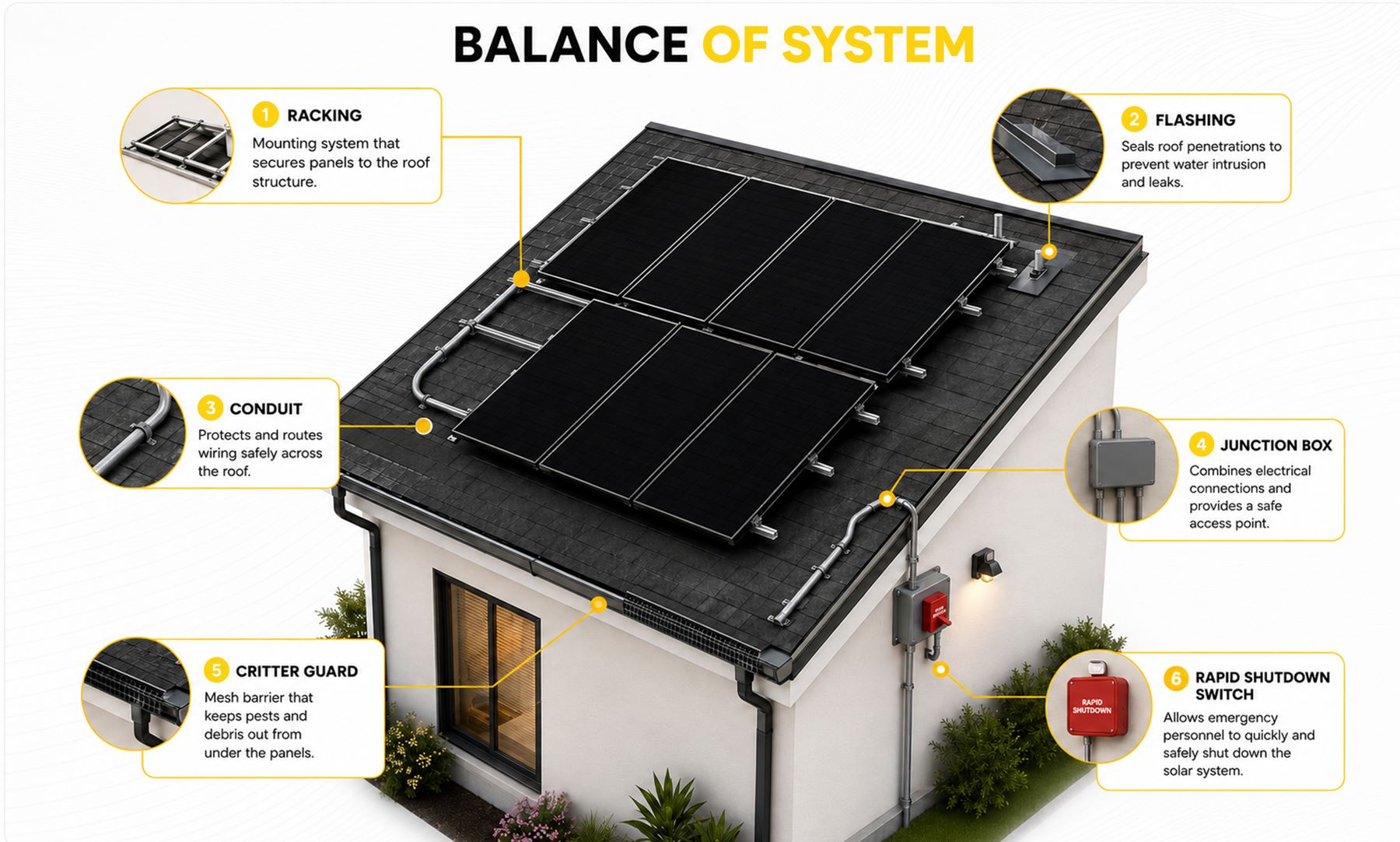
Balance of System (BOS)
All components of a solar installation other than the panels themselves, including the inverter, racking, wiring, conduit, disconnect switches, and meters. BOS quality strongly affects system reliability, safety, and long-term performance.
Battery Capacity (kWh)
The total amount of energy a battery can store, measured in kilowatt-hours. Capacity determines how long your home can run essential appliances during an outage before the battery needs recharging.
Battery Cycle Life
The number of complete charge-and-discharge cycles a battery can perform before its capacity noticeably degrades. Modern LFP home batteries are typically warrantied for thousands of cycles, often lasting 10–15 years.
Bi-directional Meter
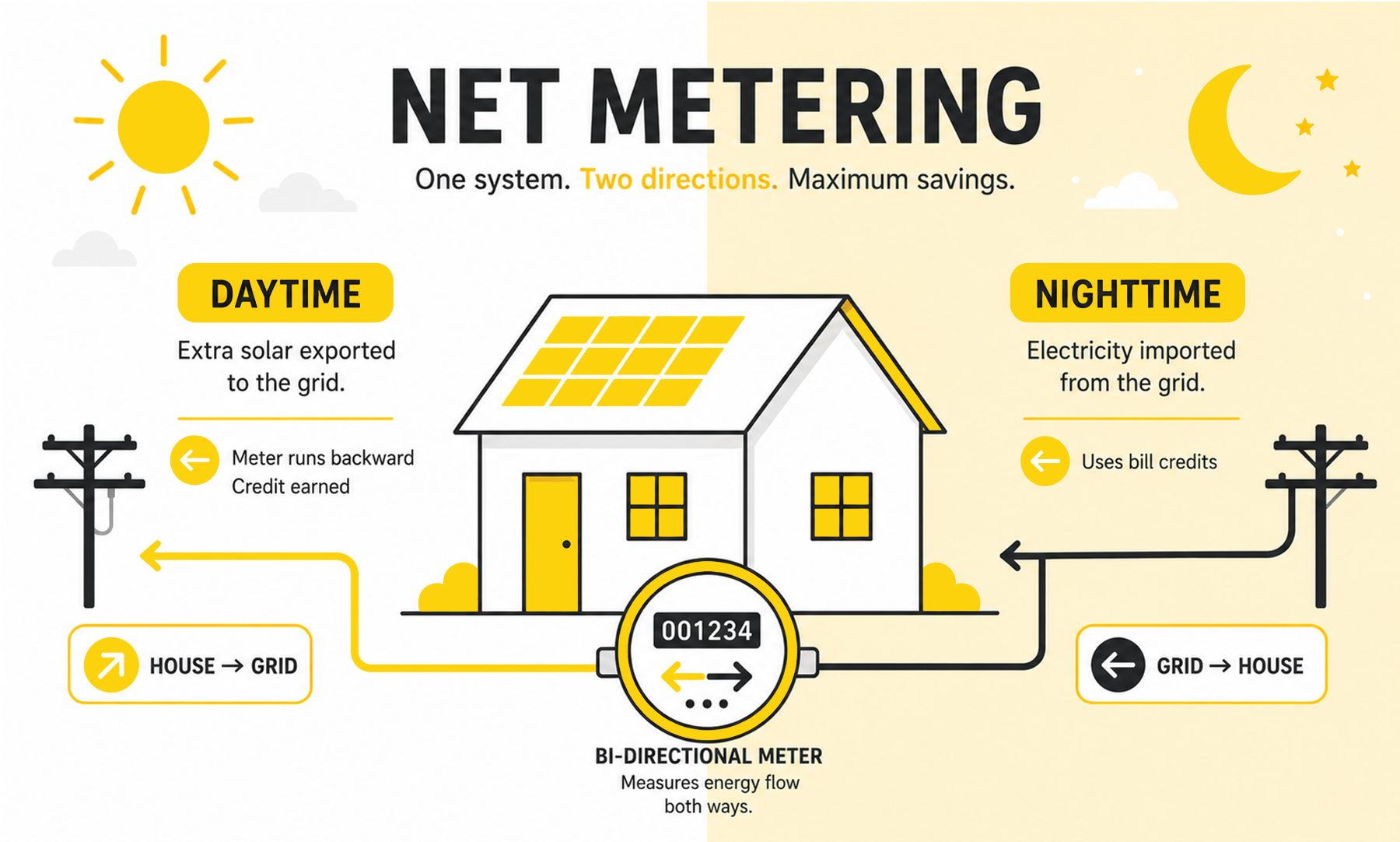
A utility meter that measures electricity flowing in both directions: power drawn from the grid and excess solar power sent back. Your utility installs one to enable net metering credits.
Bill Credit
The monetary credit applied to your electric bill for excess solar energy exported to the grid. Under Ohio net metering, credits offset future usage, lowering your monthly utility costs.
Bypass Diode
A small electronic component inside a solar panel that lets current flow around shaded or damaged cells. Bypass diodes prevent one shaded section from dragging down the entire panel's output.
C
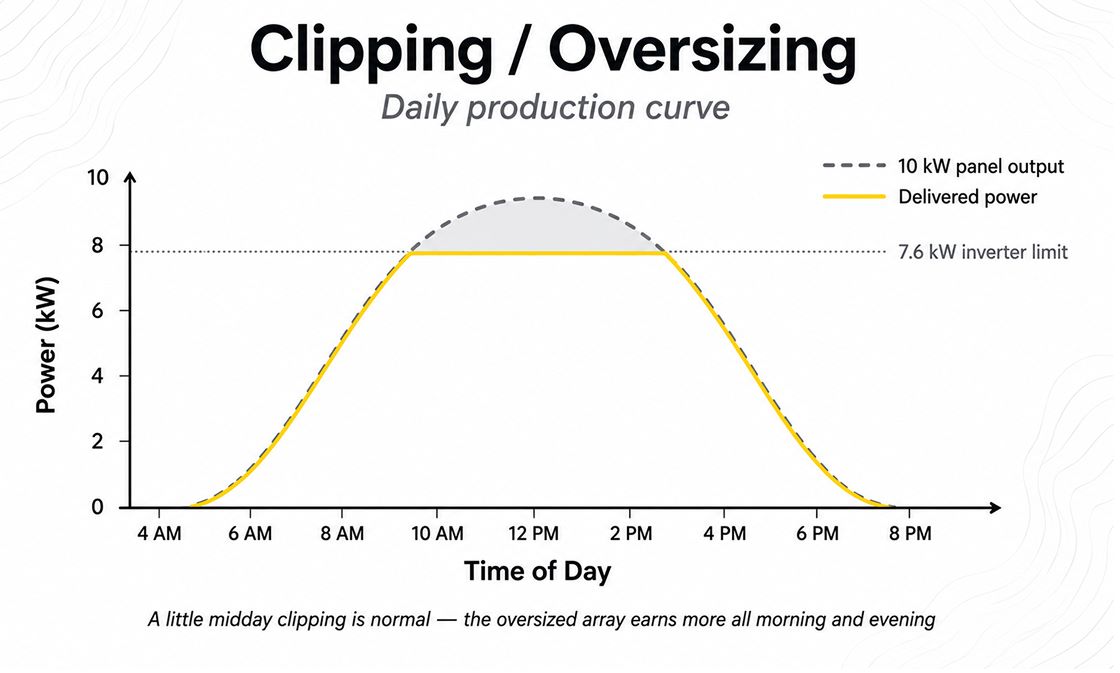
Clipping
Power loss that occurs when solar panels briefly produce more DC power than the inverter's maximum AC rating. Small amounts of clipping are normal in well-designed systems with higher DC/AC ratios.
Combiner Box
An electrical enclosure that joins the wiring from multiple solar panel strings into a single output circuit. It houses fuses or breakers that protect the system from electrical faults.
Commissioning
The final step of a solar installation, where the system is tested, inspected, and officially activated. Commissioning confirms everything operates safely and at full performance before the system begins producing power.
Conduit
Protective tubing that houses and shields electrical wiring running between solar panels, inverters, and your electrical panel. Proper conduit installation keeps wiring safe from weather, damage, and code violations.
Critter Guard
A protective mesh installed around the edges of rooftop solar panels. It prevents squirrels, birds, and other animals from nesting underneath and chewing wiring, a common issue on Midwest roofs.
D
DC-Coupled Battery
A battery system that connects directly to solar panels on the DC side, before the inverter. DC coupling is slightly more efficient and is common in new solar-plus-storage installations.
DC/AC Ratio
The ratio between a solar array's DC panel capacity and its inverter's AC output rating. Ratios above 1.0 are intentional, maximizing energy harvest during Ohio's frequent cloudy conditions.
Degradation Rate
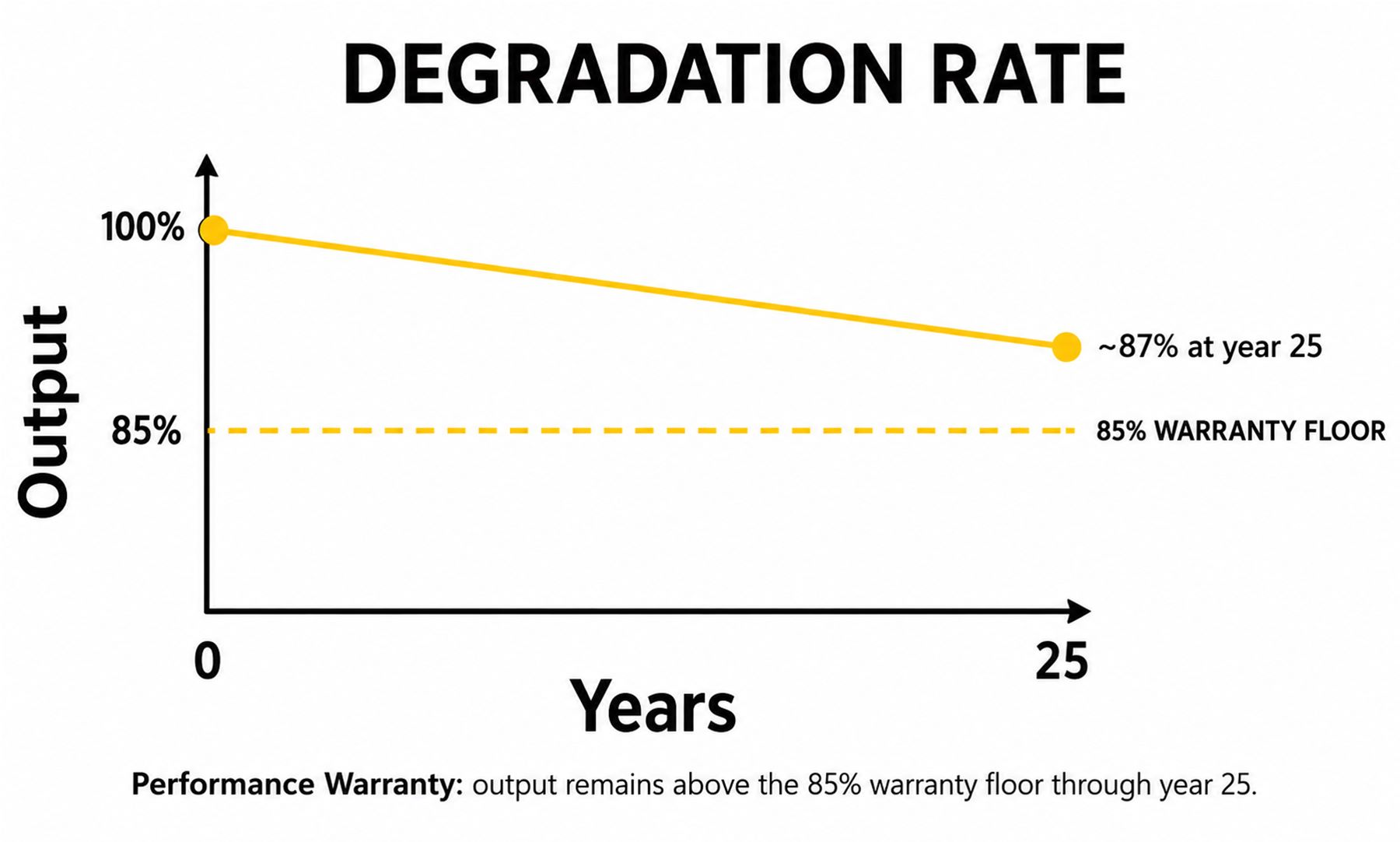
The small annual decline in a solar panel's power output as it ages, typically 0.25–0.5% per year. Quality panels still produce 85–90% of original output after 25 years.
Demand Charges
Fees on commercial electric bills based on a business's highest power draw during a billing period, not total usage. When paired with battery storage, solar panels can help reduce demand charges for commercial customers.
Demand Response
Utility programs that pay customers to reduce or shift electricity use during peak demand periods. Homes with solar batteries can participate, earning payments for supporting grid stability.
Depth of Discharge (DoD)
The percentage of a battery's stored energy that has been used. Modern LFP batteries support up to 100% DoD, meaning nearly all stored capacity is safely usable.
Direct Current (DC)
The type of electricity solar panels generate, where current flows in one direction. An inverter converts DC into AC power, which homes and the utility grid use.
E
Energy Audit
A professional assessment of how a home or business uses electricity. Audits identify efficiency improvements and help properly size a solar system to match actual energy consumption.
EPC
Engineering, Procurement, and Construction, a turnkey delivery model where one company designs the system, sources equipment, and completes installation. Full-service installers manage the entire project from design to grid activation.
EV Charger
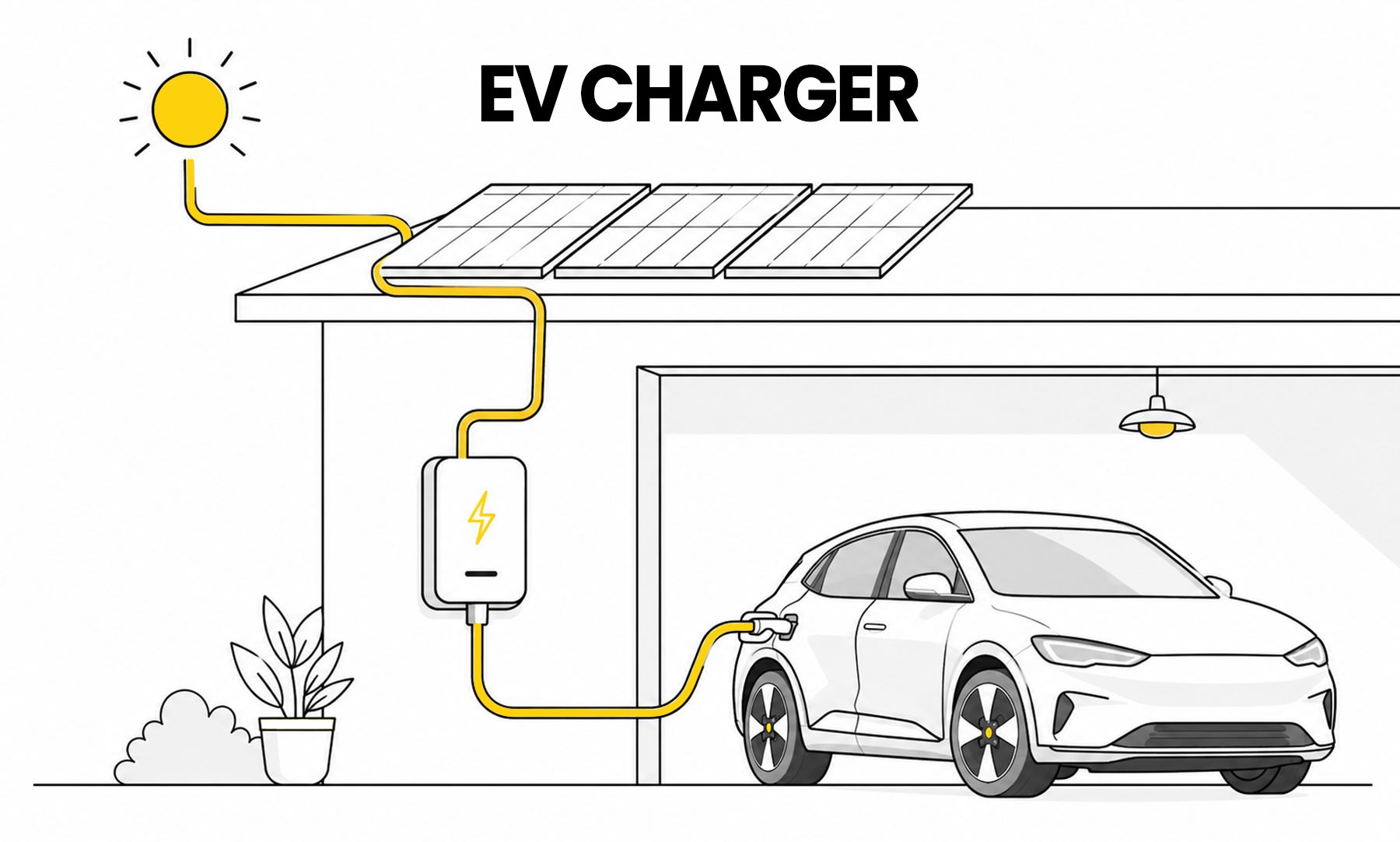
Equipment that charges an electric vehicle at home or a business. Pairing an EV charger with solar lets you power your vehicle with clean energy, maximizing fuel savings.
F
Feasibility Study
An analysis that determines whether solar makes financial and technical sense for a property. It evaluates energy usage, site conditions, costs, incentives, and projected savings before a project moves forward.
Flashing
Waterproof material installed where solar racking mounts penetrate a roof. Proper flashing seals every attachment point, protecting the roof from leaks throughout the system's 25+ year lifespan.
G
Grid Activation
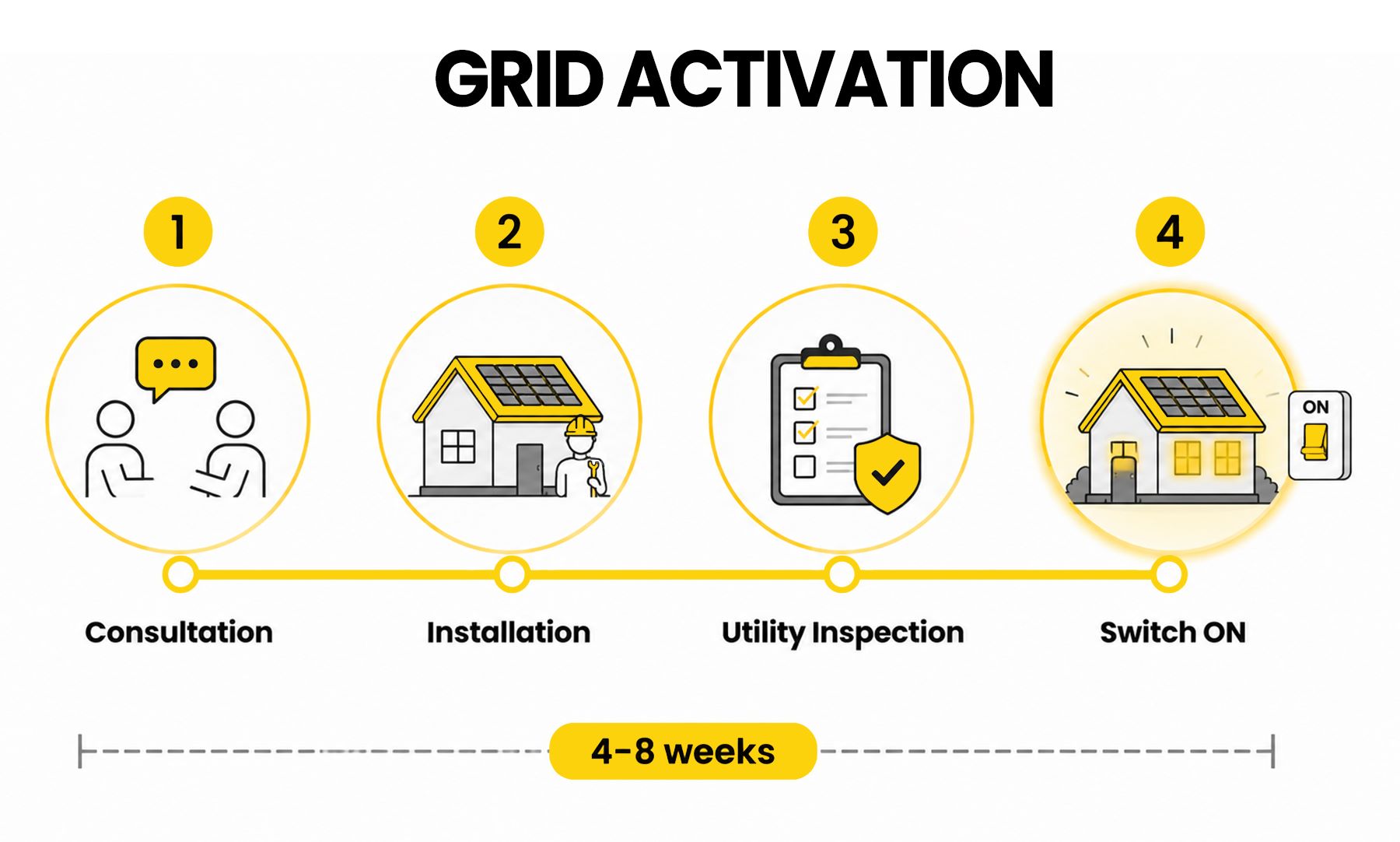
The final milestone of going solar, when your utility grants approval and your system officially begins producing power. The full process from consultation to grid activation typically takes 4–8 weeks.
Grid-Tied System
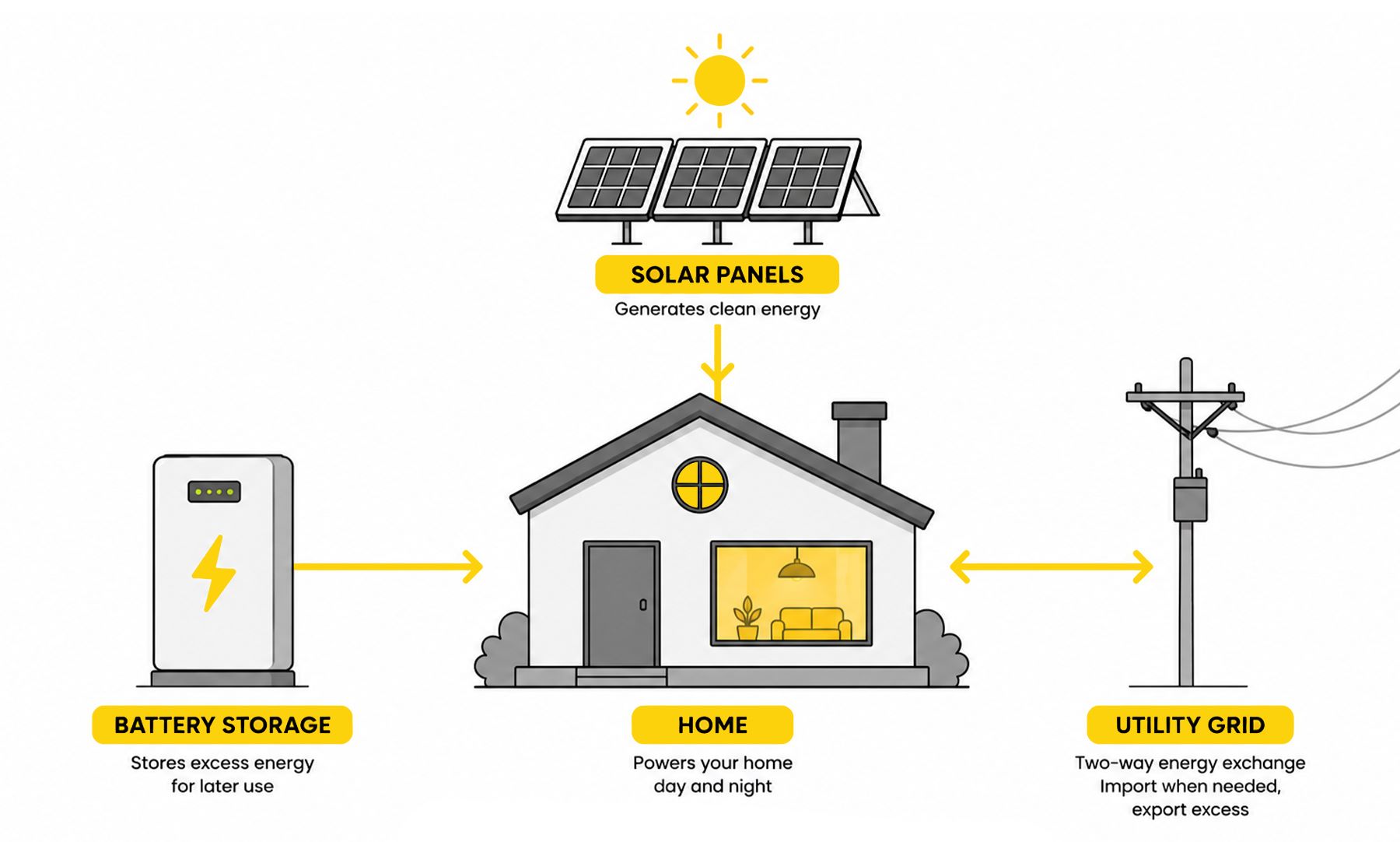
A solar system connected to the utility grid. It draws grid power when needed and exports excess solar energy for net metering credits, the most common setup for Ohio homes.
Ground-Mount System
A solar array installed on the ground rather than a roof, using dedicated racking. Ground mounts suit properties with ample land, like farms, and allow ideal tilt and orientation.
H
HELOC
A Home Equity Line of Credit, a common way to finance solar. Homeowners borrow against home equity, often at lower interest rates.
Hybrid Solar System
A solar installation that combines grid connection with battery storage. Hybrid systems export excess power for credits while keeping backup energy available during outages, the best of both approaches.
I
Insolation
The amount of solar radiation received at a location over time. Insolation data helps installers accurately predict how much energy a solar system will produce in your specific area.
Interconnection
The formal process of connecting a solar system to the utility grid. Your installer submits documentation to the utility for approval, ensuring the system meets all safety and technical standards.
Inverter
The device that converts DC electricity from solar panels into AC power for your home. Inverters are the system's brain; some modern batteries, like Powerwall 3, include integrated inverters.
Islanding
When a solar-plus-battery system operates independently from the grid during an outage, forming a self-powered "island." Proper islanding keeps your home running while safely disconnecting from utility lines.
J
Junction Box
A weatherproof enclosure on the back of each solar panel where internal wiring terminates and connects to system cabling. It houses bypass diodes and protects electrical connections from the elements.
K
Kilowatt (kW)
A unit of power equal to 1,000 watts, used to describe solar system size. A typical Ohio home installs a 10 kW system to offset most of its electricity usage.
Kilowatt-hour (kWh)
A unit of energy representing one kilowatt of power used for one hour. Utilities bill by the kWh, and battery capacity is measured in kWh of stored energy.
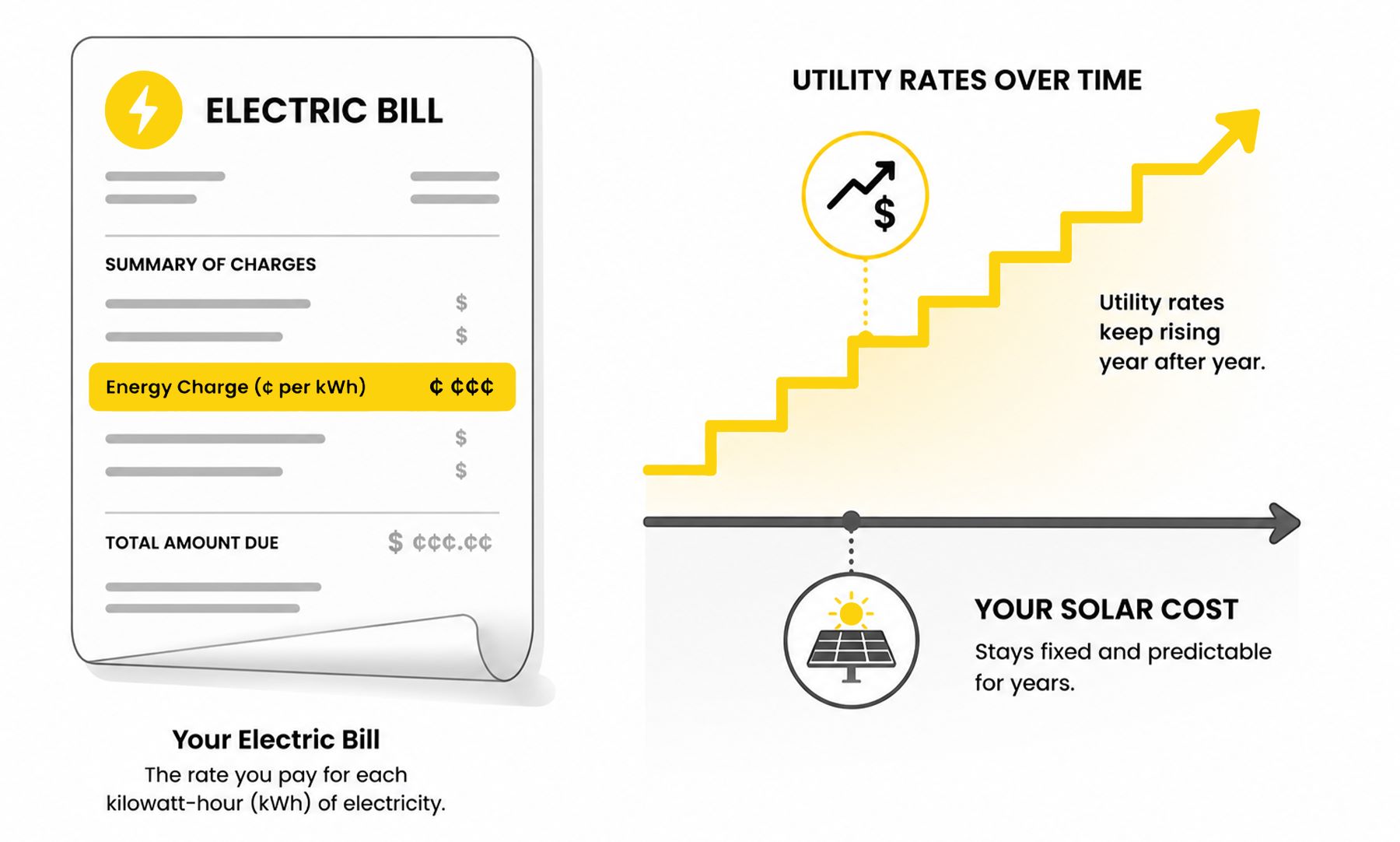
Kilowatt-hour Rate
The price your utility charges per kilowatt-hour of electricity. Solar savings are calculated against this rate; as utility rates rise, the value of your solar production grows.
L
Lease
A commercial solar financing structure where the business leases the system but retains ownership benefits, including tax credits and depreciation. Payments are fixed, and the business typically owns the system at term end.
Level 2 Charging
EV charging using a 240-volt circuit, adding roughly 20–40 miles of range per hour. Level 2 chargers pair well with solar systems for faster, cleaner home vehicle charging.
Levelized Cost of Energy (LCOE)
The average lifetime cost of producing each kilowatt-hour from a solar system, including installation and maintenance. LCOE lets you compare solar's true cost against decades of utility rates.
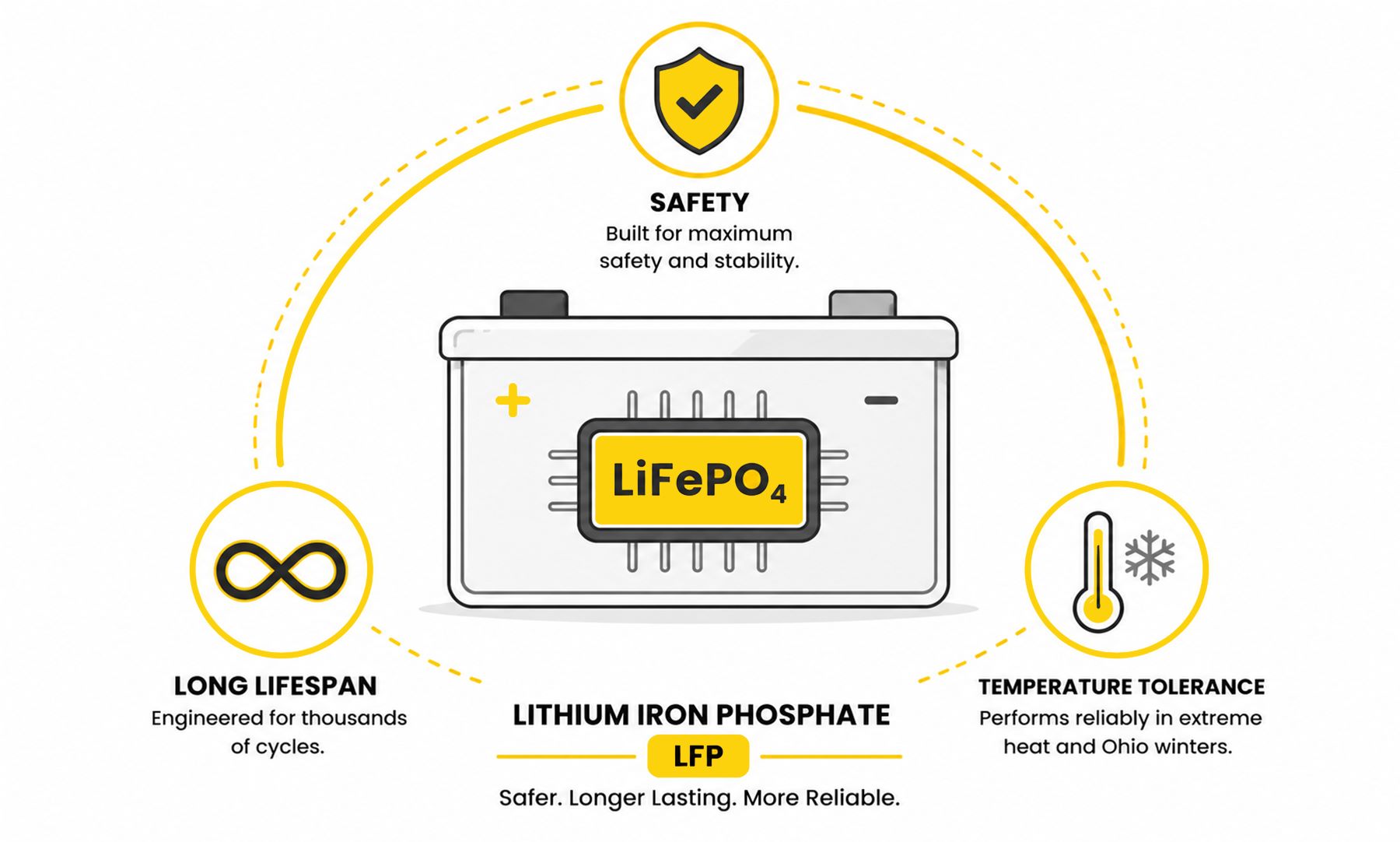
Lithium Iron Phosphate (LFP)
A battery chemistry used in modern home batteries like FranklinWH aPower and Tesla Powerwall 3. LFP offers superior safety, longer lifespan, and better performance in temperature extremes.
Load Management
Controlling which appliances and circuits draw power, especially during outages or peak-rate periods. Smart load management extends battery backup time by prioritizing essentials like refrigeration, lighting, and Wi-Fi.
M
MACRS Depreciation
A federal tax benefit letting businesses depreciate solar equipment over five years, reducing taxable income. Combined with other incentives, MACRS significantly improves commercial solar returns for Ohio businesses.
Megawatt (MW)
A unit of power equal to 1,000 kilowatts, typically used for large commercial or utility-scale solar projects. One megawatt can power roughly 150–200 average American homes.
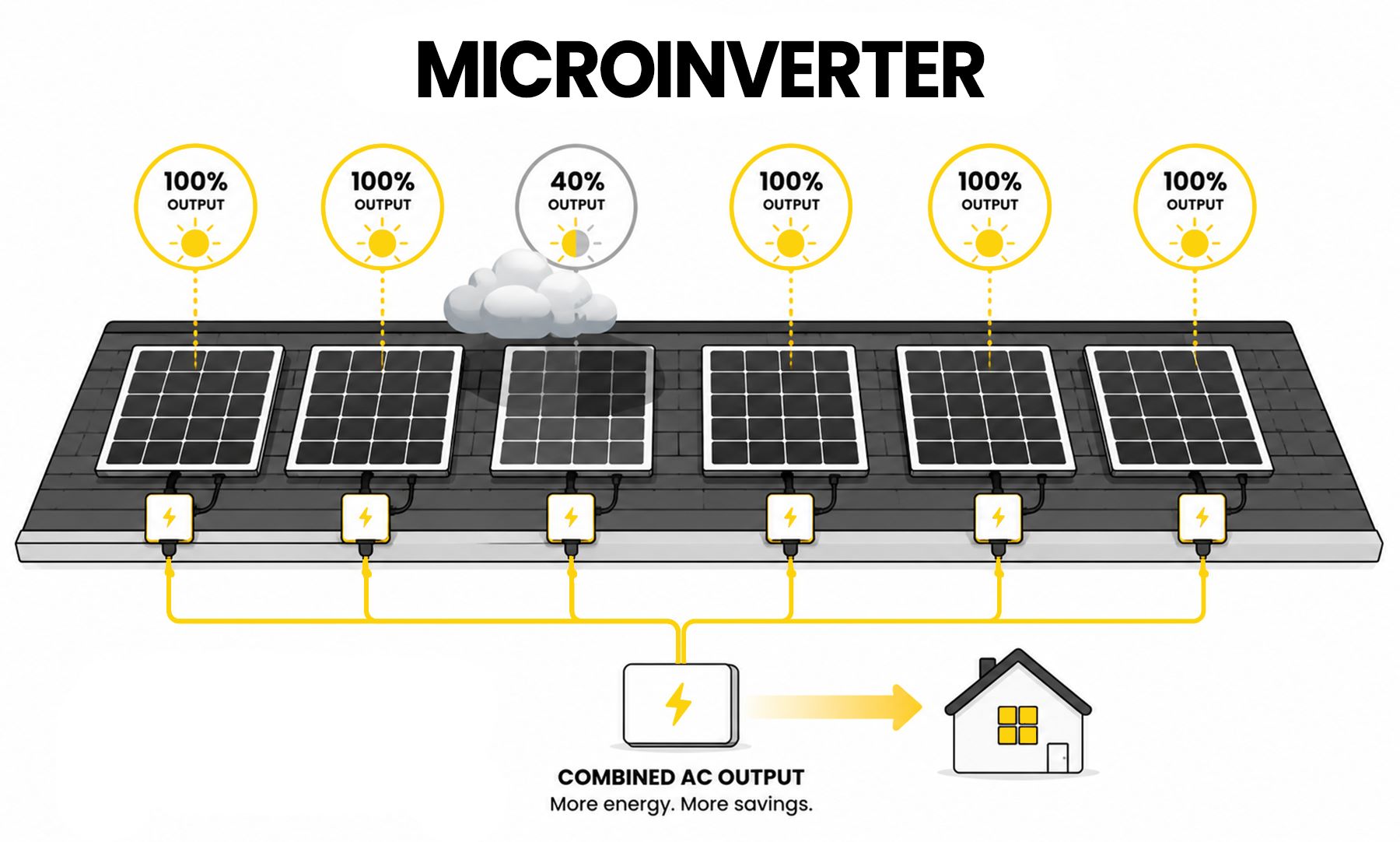
Microinverter
A small inverter mounted under each solar panel, converting DC to AC at the panel level. Microinverters optimize each panel individually, improving performance on roofs with shading or multiple angles.
Monocrystalline Panel
A solar panel made from single-crystal silicon cells, recognizable by its black appearance. Monocrystalline panels offer the highest efficiency and are the choice for modern residential installations.
MPPT
Maximum Power Point Tracking, a technology inside inverters that continuously adjusts electrical operating conditions to extract maximum power from solar panels as sunlight, temperature, and shading change throughout the day.
N
NABCEP Certification
The solar industry's most respected professional credential, issued by the North American Board of Certified Energy Practitioners. NABCEP-certified installers, like YellowLite's team, meet rigorous training and experience standards.
Nameplate Capacity
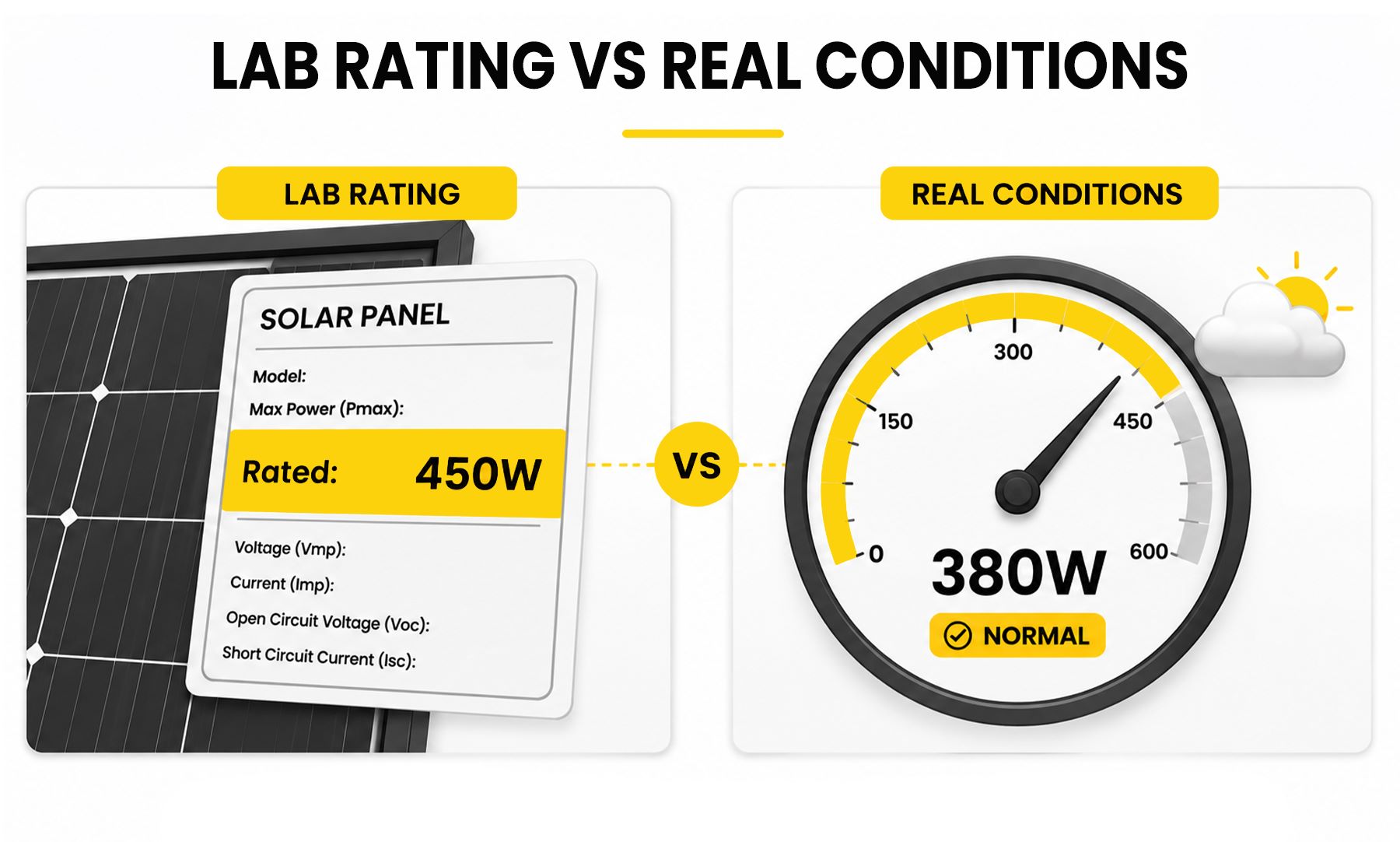
A solar panel's or system's maximum rated power output under standard test conditions. Real-world production varies with weather, orientation, and temperature, but nameplate capacity enables fair equipment comparisons.
Net Billing
A solar compensation model where exported electricity is credited at wholesale rates rather than retail rates. Some states use net billing; Ohio currently maintains traditional net metering for solar customers.
Net Metering
A utility billing program crediting solar owners for excess electricity sent to the grid. Ohio utilities offer net metering, letting homeowners offset usage with credits, with systems sized up to 120% of annual consumption.
O
Off-Grid System
A solar system operating completely independently from the utility grid, relying on battery storage for nighttime and cloudy-day power. Off-grid setups suit remote properties without reliable utility access.
Operating Lease
A commercial solar financing option where a leasing company owns the system and captures tax benefits, while the business makes tax-deductible monthly payments. Ideal for organizations with limited tax liability.
Oversizing
Designing a solar array's DC capacity larger than its inverter's AC rating. Strategic oversizing boosts energy production during mornings, evenings, and Ohio's frequent overcast conditions, improving overall system economics.
P
PACE Financing
Property Assessed Clean Energy financing, letting commercial property owners fund solar through a voluntary property tax assessment. PACE requires no upfront capital and repayment transfers with property ownership.
Panel Efficiency
The percentage of sunlight a solar panel converts into electricity. Modern residential panels achieve 20–23% efficiency; higher efficiency means more power from limited roof space.
Partial / Essential Backup
A battery configuration that powers only selected critical circuits, like refrigeration, lighting, and Wi-Fi, during outages. Essential backup costs less than whole-home backup while covering what matters most.
Peak Shaving
Using battery storage to reduce a facility's highest power draws from the grid. Peak shaving lowers commercial demand charges, one of the biggest savings opportunities for Ohio businesses.
Peak Sun Hours
The daily hours when sunlight intensity averages 1,000 watts per square meter. Ohio averages about 4–4.5 peak sun hours daily, a key input for accurate system sizing.
Performance Warranty
A manufacturer's guarantee that solar panels will produce a minimum percentage of rated output over time, typically 85–90% after 25 years, protecting your long-term energy production investment.
Permission to Operate (PTO)
The utility's official authorization to turn on your solar system after final inspection. PTO is the last approval before grid activation and the start of energy production.
Permitting
Obtaining required approvals from local building departments and utilities before solar installation. A full-service installer manages all permitting, ensuring the system meets electrical codes and jurisdiction requirements.
Photovoltaic (PV)
The technology that converts sunlight directly into electricity using semiconductor materials. "PV" describes any solar-electric equipment, distinguishing it from solar thermal systems that produce heat instead.
Polycrystalline Panel
A solar panel made from multiple silicon crystal fragments, identifiable by its blue tint. Polycrystalline panels cost less but offer lower efficiency than the monocrystalline panels now standard in homes.
Power Optimizer
A module-level device attached to each solar panel that conditions DC power before sending it to a central inverter. Optimizers reduce shading losses and enable panel-level monitoring.
Power Purchase Agreement (PPA)
A financing arrangement where a third party owns and maintains the solar system, and the property owner buys the electricity it produces at an agreed rate, typically over 15–25 years.
Product Warranty
A manufacturer's guarantee covering defects in solar equipment materials and workmanship, typically 12–25 years for panels. Product warranties are separate from performance warranties, which guarantee energy output levels.
PUCO
The Public Utilities Commission of Ohio, the state agency regulating Ohio's electric utilities. PUCO oversees net metering rules, interconnection standards, and utility rates affecting solar customers statewide.
R
Racking / Mounting System
The structural hardware that secures solar panels to a roof or the ground. Quality racking withstands Midwest snow and wind loads while protecting roof integrity for decades.
Rapid Shutdown
A National Electrical Code safety requirement enabling quick de-energization of rooftop solar systems. Rapid shutdown protects firefighters and first responders working on or near a solar-equipped building.
REAP Grant (USDA)
The USDA's Rural Energy for America Program, providing grants covering up to 50% of solar costs for farmers and rural small businesses. Combined with other incentives, REAP dramatically reduces upfront farm solar costs.
Round-Trip Efficiency
The percentage of energy retained after storing electricity in a battery and drawing it back out. Modern home batteries achieve roughly 90% round-trip efficiency, minimizing energy lost in storage.
S
Sales Tax Exemption (Ohio)
Ohio waives state sales tax on qualifying solar equipment, including panels, inverters, and batteries. The exemption applies automatically, reducing upfront system costs by roughly 5.75%.
Self-Consumption
Using the solar electricity you generate directly in your home rather than exporting it. Batteries increase self-consumption by storing daytime production for evening use, maximizing the value of every kilowatt-hour.
Shading Analysis
An assessment of how trees, buildings, and obstructions cast shadows on a roof throughout the year. Shading analysis during site assessment ensures accurate production estimates and optimal panel placement.
Single-Phase vs Three-Phase Power
Single-phase power serves most homes; three-phase power serves commercial buildings with heavy equipment. Your electrical service type determines which inverters and system designs are compatible with your property.
Site Assessment
A professional evaluation of your property's solar potential, reviewing roof condition, orientation, shading, and electrical setup. YellowLite offers free virtual site assessments to begin the solar process.
Smart Meter
A digital utility meter that records electricity usage in detailed intervals and communicates directly with the utility. Smart meters support net metering, time-of-use rates, and accurate solar billing.
Solar Array
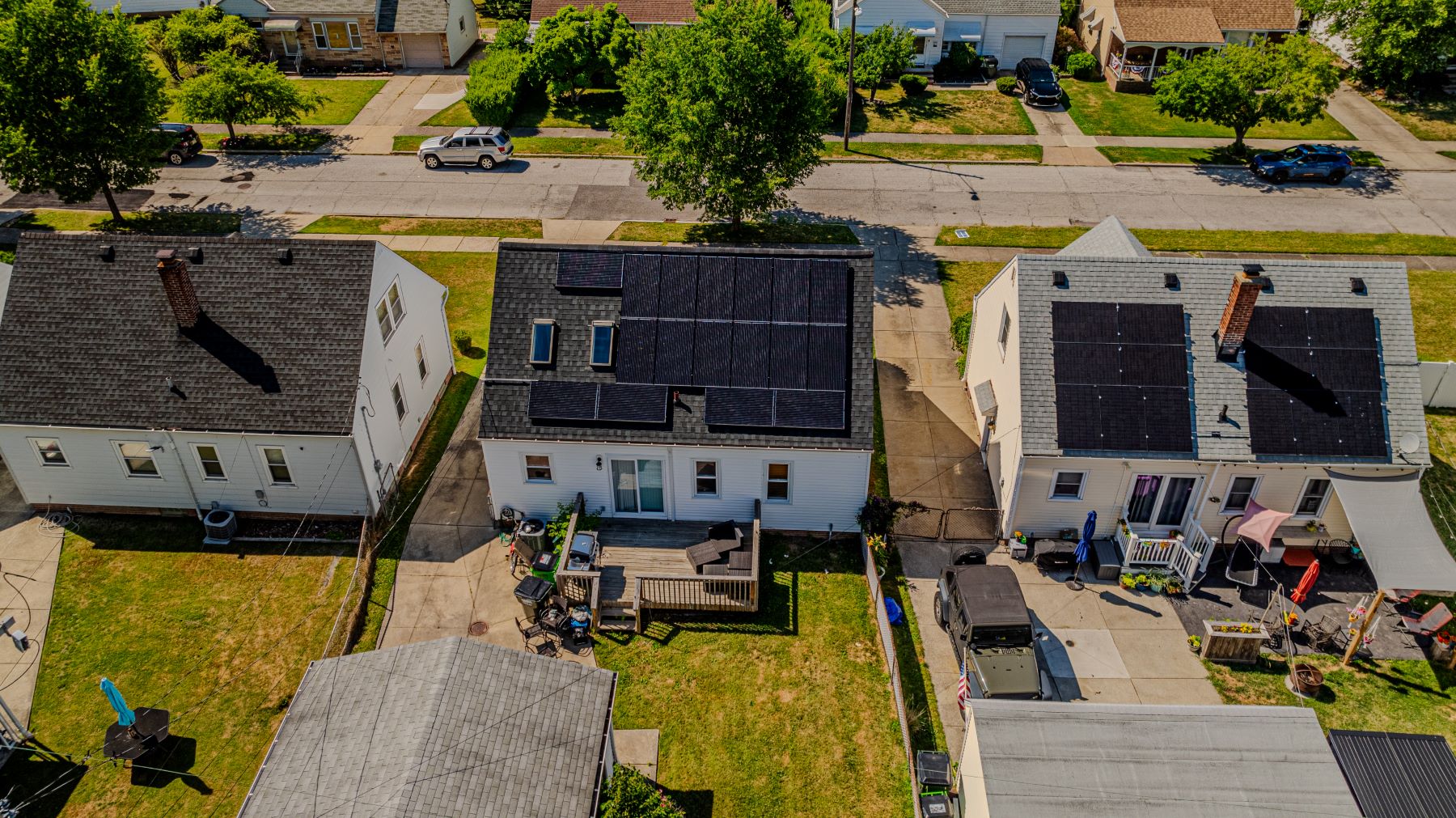
The complete set of solar panels installed together as one system. Array size, orientation, and layout are custom-designed around your roof's footprint and energy needs.
Solar Battery
A storage device that saves excess solar energy for use at night, during peak rates, or during outages. Popular options include the FranklinWH aPower and Tesla Powerwall 3.
Solar Cell
The basic building block of a solar panel, a semiconductor wafer that converts sunlight into electricity. Dozens of cells wired together form a single solar panel.
Solar Irradiance
The power of sunlight striking a surface at a given moment, measured in watts per square meter. Irradiance varies with weather, season, and location, driving solar production forecasts.
Solar Lease
A $0-down arrangement where you pay fixed monthly payments for a solar system owned and maintained by a third party. Leasing trades rising utility bills for predictable, lower payments.
Solar Loan
Financing that lets you own your solar system while paying over time. Common loan options include bank loans, third-party financing, and HELOCs, while preserving ownership benefits like added home value.
Solar Monitoring
Software and hardware that track your system's energy production in real time. Monitoring alerts your installer to unusual changes, enabling proactive maintenance before small issues affect savings.
Solar Offset
The percentage of your electricity usage covered by solar production. A 100% offset means your system generates as much energy annually as your home consumes.
Solar Panel
A device that converts sunlight into electricity using photovoltaic cells. Residential panels typically produce 400+ watts each, and a full rooftop system can power most of a home's needs.
Solar Payback Period
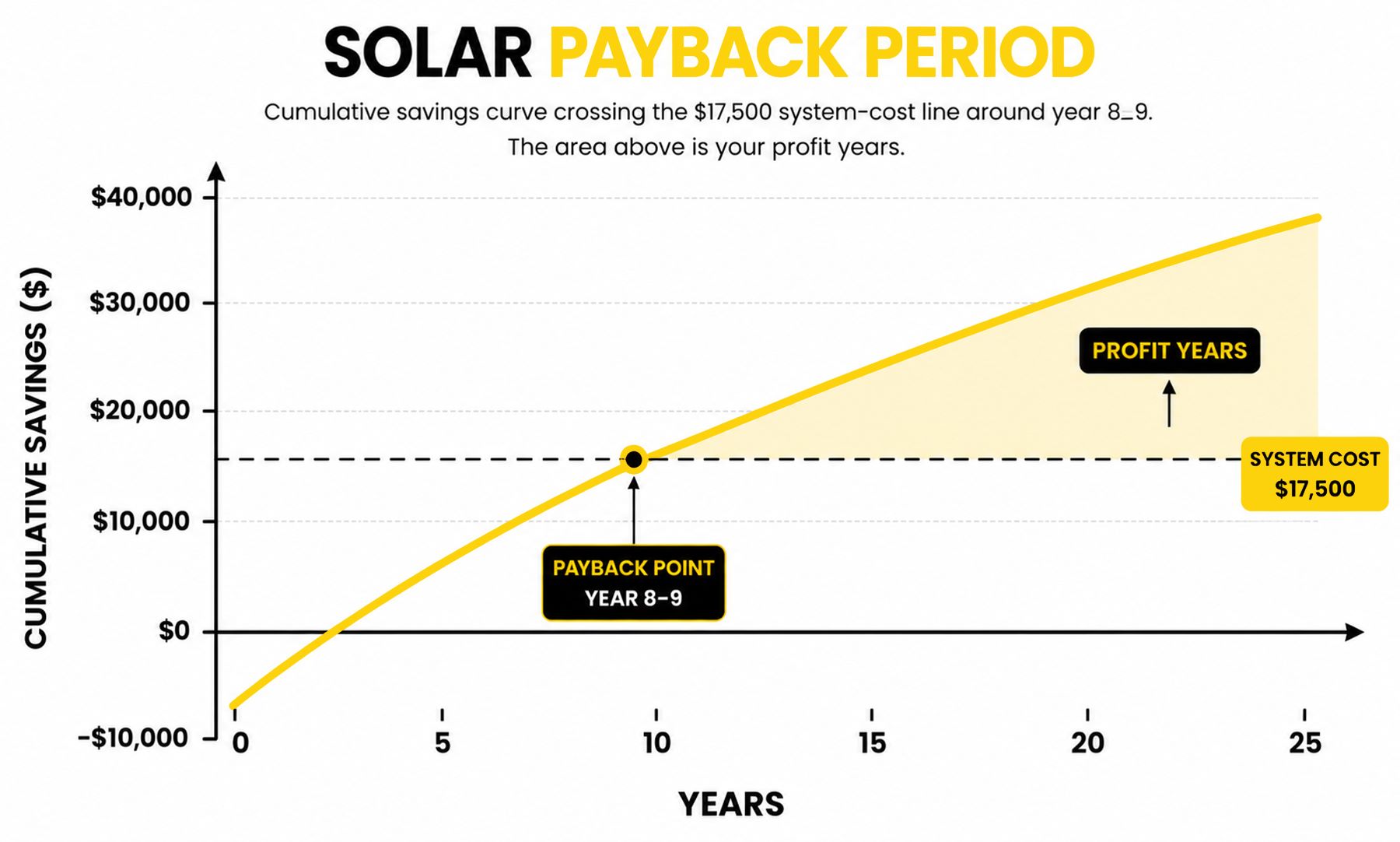
The time it takes for energy savings to equal your solar investment. Ohio systems typically pay for themselves in 7–10 years, followed by 15+ years of nearly free electricity.
SREC
A Solar Renewable Energy Certificate earned for each 1,000 kWh your system produces. Ohio solar owners sell SRECs on the market, typically earning a modest $50–100 annually in additional income.
String Inverter
A central inverter that converts DC power from a series-connected group of panels, called a string. String inverters are cost-effective for roofs with consistent sun exposure and minimal shading.
System Sizing
Determining the right solar system capacity based on your energy usage, roof space, and goals. Proper sizing balances production against consumption; most Ohio homes suit systems around 10 kW.
T
Tilt Angle
The angle at which solar panels are mounted relative to horizontal. In Ohio, tilt angles near 30–40 degrees capture the most annual sunlight, though roof pitch usually determines placement.
Time-of-Use (TOU) Rates
Utility pricing where electricity costs more during high-demand hours and less off-peak. Solar-plus-battery systems thrive under TOU rates by storing cheap energy and avoiding expensive peak pricing.
Transfer Switch
An electrical device that safely switches your home between grid power and backup power sources. Modern battery systems include automatic transfer functionality for seamless outage protection.
U
Usable Capacity
The portion of a battery's total capacity actually available for use, determined by its depth of discharge limits. Modern LFP batteries make nearly 100% of rated capacity usable.
W
Watt (W)
The basic unit of electrical power. Solar panel output is rated in watts; a typical modern residential panel produces 400–450 watts under full sun.
Whole-Home Backup
A battery configuration that powers your entire house during grid outages, not just essential circuits. Scalable systems like FranklinWH aPower 2 support whole-home backup for complete energy independence.
Wind Load
The force wind exerts on solar panels and racking. Systems in Ohio are engineered to local wind-load requirements, ensuring panels stay secure through Midwest storms.