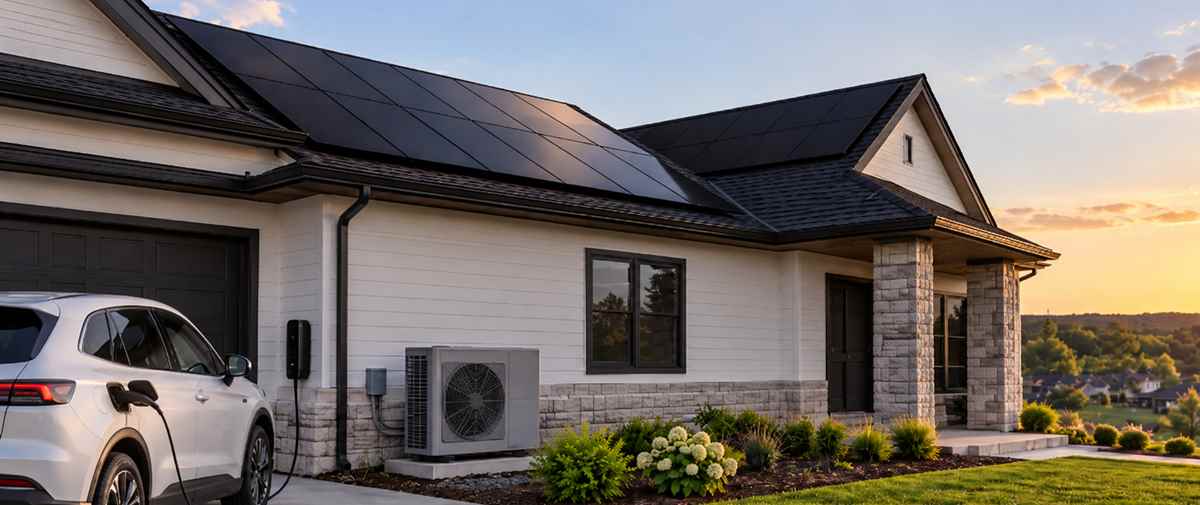


A few years after installing solar, your home may use electricity differently. You may add EV charging in the garage, a heat pump to replace the furnace, or new electric appliances in the kitchen. Installing solar based only on today’s electric bill can leave your home underprepared for these changes.
Thoughtful solar system sizing looks beyond current consumption to consider future upgrades, available roof space, electrical panel capacity, and whether battery storage could support your goals. For homeowners considering solar panels in Ohio, planning can reduce the need for costly redesigns as the home becomes more electric over time.
Size Your Solar System for the Home You Are Planning
Most solar proposals begin with the previous 12 months of electricity use. That information establishes a helpful baseline, but it may not show what your household will need three or five years from now.
For example, replacing a gas furnace with a heat pump can significantly increase your home's electric usage. Buying an EV adds regular charging demand, which should be considered when planning solar panels for EV charging. Other changes, such as a home addition, hot tub, finished basement, or electric water heater, all can increase annual electricity consumption.
Good solar system sizing should therefore consider two energy profiles:
- Your current annual electricity use
- Your expected use after planned upgrades
A solar professional may review your utility bills, driving habits, heating equipment, roof conditions, shade, and expected timing of future purchases. This makes solar system sizing more accurate than simply adding a few extra panels without calculating the new demand.
The following questions can help prepare for a solar consultation:
- Do you expect to purchase an EV?
- How many miles will it travel each week?
- Are you considering a heat pump or heat pump water heater?
- Will any gas appliances become electric?
- Are you planning an addition or major renovation?
- Would you like battery backup during an outage?
- Will the number of people in your home increase?
At YellowLite, we design each solar system around the individual property, electricity use, roof conditions, and long-term energy goals. Its available solar panel system options can also help homeowners compare equipment based on roof space and expected production.
How EVs and Heat Pumps Change Household Electricity Use
EV chargers and heat pumps do not affect a home in the same way. An EV usually adds a flexible charging load, while a heat pump’s electricity use changes with the weather, thermostat settings, home insulation, and equipment efficiency.
The U.S. Department of Energy notes that heat pumps can provide both heating and cooling. Their actual energy use depends on the system and the home it serves.
Similarly, EV charging needs depend on the vehicle, daily mileage, battery capacity, charging level, and charging schedule. Many drivers charge overnight with Level 1 or Level 2 equipment. Level 2 charging generally uses a 240-volt supply and can charge a typical EV battery overnight.
|
Future Upgrade |
What It Changes |
What Solar Planning Should Consider |
|
Electric vehicle |
Adds regular charging demand |
Miles driven, charger level, and charging schedule |
|
Heat pump |
Adds heating and cooling demand |
Home size, insulation, climate, and backup heat |
|
Electric water heater |
Adds daily water-heating demand |
Household size and equipment efficiency |
|
Induction range |
Shifts cooking from gas to electricity |
Circuit capacity and expected usage |
|
Home addition |
Expands the conditioned living area |
Added lighting, cooling, heating, and appliances |
Solar system sizing for EV charging and heat pumps should be based on total annual energy demand. Daytime solar can support home and EV use, while the grid or energy storage can help cover overnight charging and periods of higher demand.
Check the Roof, Electrical Panel, and Battery Plan Together
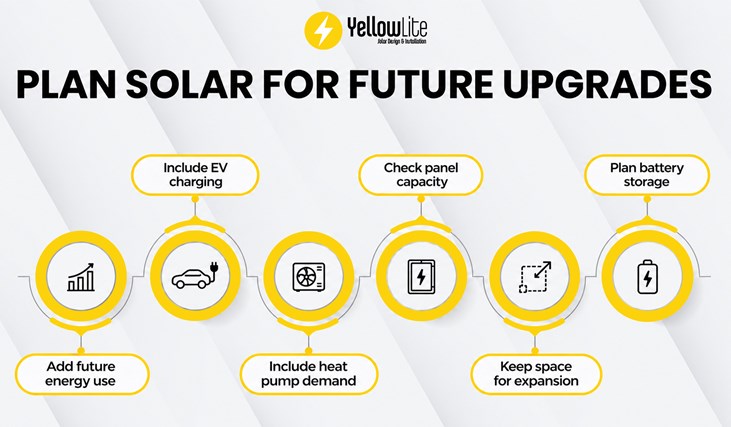
Future-ready solar planning should cover more than panel capacity. Some homes may need electrical panel or wiring upgrades before adding an EV charger or heat pump. A qualified electrician can assess the existing circuits, equipment requirements, and whether load management or a service upgrade is needed.
Before your solar installation, review:
- Roof space and expansion options
- Inverter and electrical panel capacity
- EV charger and heat pump requirements
- Battery capacity and power output
- Utility interconnection requirements
Battery storage can save solar energy for later, but the right system depends on whether you want to support overnight charging, everyday household use, or essential loads during outages. YellowLite’s solar design and engineering services can assess the roof, equipment, storage, EV plans, and future expansion together.
Key Takeaways
Future-ready solar begins with understanding where your household’s electricity use is going, not only where it is today. EV charging, heat pumps, electric appliances, and home renovations can all impact how many panels you'll need. Your roof, electrical panel, inverter, charging schedule, and battery goals should be evaluated together.
YellowLite can review your current bills, roof conditions, shade, location, future electrical plans, and expected annual production to develop a practical solar power for home plan. A custom solar quote can then reflect both present demand and realistic future upgrades, helping you build a system that continues to fit your household as its energy needs change.

FAQs
Q1. Can my current solar panels handle a heat pump and EV charger?
Possibly, but proper solar system sizing must compare your annual production with the additional energy demand. Your inverter, roof space, electrical panel, and utility connection should also be reviewed.
Q2. How do I upgrade my home with solar panels for EV charging?
Start with your daily mileage, vehicle efficiency, charger level, and charging schedule. A solar professional can estimate the added annual electricity use and assess expansion options.
Q3. How many solar panels for heat pump use do I need?
Solar system sizing considers the heat pump model, home size, insulation, Ohio weather, backup heating, and expected annual electricity use. One standard panel count will not fit every home.
Q4. What size electrical panel is required for future electrification?
There is no universal requirement. A licensed professional should perform a load calculation before recommending a panel upgrade, load-management system, or new circuits.
Q5. Does adding a solar battery mean I need fewer panels?
Not necessarily. A battery stores available energy but does not generate it, so panel capacity and battery capacity must be calculated separately.