



Electricity prices can be difficult to understand because the rate advertised by a supplier does not always match the total amount on your monthly bill. Ohio homeowners pay for electricity supply, delivery, transmission, riders, taxes, and other charges that may change over time.
Understanding Ohio energy rates can help you compare plans and identify changes affecting your bill. However, comparing suppliers only addresses part of the challenge. Homeowners looking beyond the next contract period may also consider solar, which reduces the amount of electricity a home needs to purchase from the grid and provides greater control over long-term energy costs.
What Are the Current Ohio Energy Rates?
There is no single electricity rate that applies to every Ohio household. Your cost depends on your local electric utility, your electric supplier, energy consumption, and the charges approved for your service territory.
The U.S. Energy Information Administration publishes statewide electricity-price averages, but these figures combine different utilities, customer types, and rate structures. Your actual price may therefore be higher or lower than the reported Ohio average.
A practical way to understand what your household is paying is to calculate the effective rate from your latest electric bill:
Total electric bill ÷ total kWh used = effective electricity cost per kWh
For example, if your total bill is $190 and your household used 1,000 kWh, your effective electricity cost is 19 cents per kWh. This calculation accounts for more than the advertised supply price, making it a better starting point for comparing your overall costs.
What Makes Up an Ohio Electricity Bill?
Ohio energy rates are made up of several components. Understanding them can help explain why your total bill may increase even when your electricity usage remains relatively stable.
|
Bill component |
What it covers |
Can shopping change it? |
|
Electricity supply |
Generating or purchasing electricity |
Often, yes |
|
Distribution |
Delivering electricity through local poles and wires |
Generally, no |
|
Transmission |
Moving electricity across the regional grid |
Usually not directly |
|
Riders and fees |
Utility programs, infrastructure, and approved adjustments |
Generally, no |
|
Taxes |
Applicable state and local taxes |
No |
In most Ohio service territories, choosing another supplier changes only the electricity supply portion of the bill. Your local utility continues delivering power, maintaining infrastructure, responding to outages, and billing for regulated charges.
This distinction is important when you compare energy rates in Ohio. A lower supply rate does not reduce every part of your bill or guarantee the same percentage of savings on your total monthly cost.
What Causes Ohio Energy Rates to Change?
Ohio energy rates respond to changes across the electricity market and regional power grid. Generation expenses, fuel prices, electricity demand, transmission investments, capacity costs, and supplier contract terms can all affect what households eventually pay.
Wholesale Energy Costs
Electricity suppliers purchase power through wholesale markets or long-term agreements. Fuel prices, weather conditions, available generation, and changes in regional demand can influence the cost of that electricity.
Capacity Costs
Capacity payments help ensure that enough generation resources remain available during periods of peak demand. When regional capacity costs increase, those expenses may eventually affect the supply rates offered to Ohio customers.
Grid and Transmission Investments
Utilities and regional grid operators invest in transmission lines, substations, and other infrastructure needed to deliver dependable electricity. Some of those expenses may appear on customer bills through delivery charges or riders.
Seasonal Energy Demand
Heating and cooling can significantly increase household electricity consumption. Even when the rate remains unchanged, using more kilowatt-hours during extremely hot or cold weather can raise the total bill.
Supplier Contract Changes
A fixed or promotional plan may move to a different rate when its initial term expires. Variable-rate plans can also change from one billing period to another. Reviewing contract notices and expiration dates can help prevent unexpected price changes.
How Does Solar Help Future-Proof a Home Against Rising Electricity Rates?
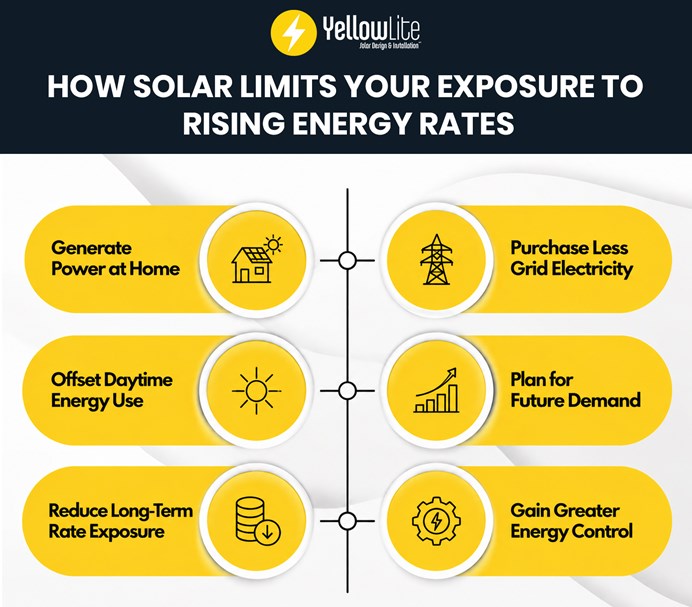
Residential solar panels generate electricity at your property, reducing the amount of power your home needs to purchase from the utility. Every kilowatt-hour used directly from your solar system is one less kilowatt-hour purchased at the current grid rate.
Solar panels protect you from rising energy costs. If your home previously purchased 100% of its electricity from the grid but solar offsets a substantial portion of that usage, future rate changes affect a smaller share of your household’s total electricity needs.
How many solar panels you'll need depends on:
- Your annual electricity consumption
- Available roof or ground space
- Roof direction, pitch, and shading
- Solar system size and production
- Changes in future household demand
- Utility billing and interconnection policies
A professional solar evaluation uses these factors to estimate how much grid electricity the home may offset.
Building a Solar Plan Around Your Future Energy Needs
A solar system should be designed around more than your latest electricity bill. Homeowners should also consider how their energy use could change over the next several years.
Adding an electric vehicle, heat pump, electric water heater, home office, workshop, pool, or major appliance may raise annual electricity consumption. If these upgrades are already planned, they should be discussed during the system-design process.
YellowLite’s residential solar planning process evaluates household electricity usage, property conditions, roof suitability, and expected future demand. This helps homeowners understand whether solar is suitable and what system size may support their long-term goals.
Planning can reduce the likelihood of installing a system based only on today’s needs while overlooking tomorrow’s electricity demand.
Conclusion: Compare Rates Today and Plan for the Future
Understanding Ohio energy rates can help you recognize what you are paying, compare supplier contracts more accurately, and avoid unexpected renewal terms. However, switching suppliers changes only part of the bill and provides savings only while the selected offer remains competitive.
Solar introduces a longer-term approach by reducing how much electricity your household needs to purchase from the grid. The right system can lower grid dependence while supporting future additions such as electric vehicles, heat pumps, or other electric upgrades.
YellowLite helps Ohio homeowners evaluate current electricity usage, future energy needs, and property-specific solar potential. Instead of preparing for one rate change at a time, start developing a customized energy plan built around your home and long-term goals.

FAQs
1. How can I compare energy rates in Ohio?
Use the official Ohio Apples to Apples comparison tool and select your local utility. Compare the price per kWh, rate type, contract duration, monthly fees, cancellation charges, introductory terms, and renewal conditions. Check out this 3 min video on our YouTube channel that breaks down how to shop for a better rate.
2. Will switching electricity suppliers lower my entire bill?
Not necessarily. Switching suppliers generally changes the generation or supply portion. Distribution, transmission, riders, taxes, and other utility charges may remain.
3. Can solar protect homeowners from rising Ohio energy rates?
Solar reduces the amount of electricity a home purchases from the grid. Future rate changes then apply to a smaller portion of the household’s electricity needs, although fixed utility charges may remain.
4. Can solar panels eliminate an electric bill?
Solar may substantially reduce electricity purchases, but it does not guarantee a zero-dollar bill. Results depend on system production, household consumption, weather, utility policies, and fixed charges.
5. Should future electricity usage be considered when sizing solar?
Yes. Planned additions such as an electric vehicle, heat pump, electric water heater, pool, or workshop should be considered when estimating future household demand.
6. How can I find out whether my Ohio home is suitable for solar?
A solar evaluation can assess roof condition, orientation, shading, available space, electricity consumption, and future energy needs. These factors help determine whether solar is suitable and what system size may be required.