


The global shift to renewable energy has accelerated, driven by technological innovation and greater climate awareness. In 2026, solar energy is providing reliable sustainability, energy independence, and cost savings. Residential solar panel owners can reduce annual electric bills by 80-90%, supported by an 85% drop in panel costs since 2010 and efficiencies above 23%. In Ohio, net metering policies in 2026 will further increase these benefits by allowing homeowners to offset usage and earn credits for their solar energy.
Solar adoption is projected to grow through 2026 and beyond. In 2025, global installations surpassed 1 TW, raising total capacity above 2 TW. By 2030, capacity is expected to approach 8 TW, supported by innovations like bifacial panels and floating solar farms. Net metering remains essential, while states consider hybrid models that combine credits with battery incentives. This guide covers net metering, its benefits, 2026 trends such as smart metering integration, Ohio's updated policies, and future outlook to help you make informed solar decisions.
Solar Net Metering in Ohio: Use Net Metering for Solar Power to Save the Most Money in 2026
Net metering is helping people in Ohio cut their energy bills by up to 90%. When you combine solar panels with good policies, you can ditch the utility and get your money back in less than seven years.
Want to understand how net metering in Ohio boosts your solar savings? Explore this complete net metering guide in Ohio for benefits, policies, and real cost advantages.
What does Solar Net Metering mean?
Solar net metering is Ohio's billing method that gives homeowners a credit for the excess energy their solar panels generate and send to the grid. Bidirectional meters monitor the balance between daytime overproduction and nighttime use.
If you want to learn more about the benefits of solar net metering, talk with one of our solar experts so you can find out how much money you can save.
How Does Net Metering for Solar Power Work?
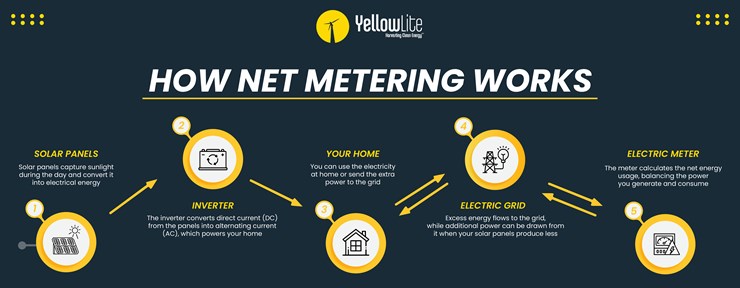
Net metering is a straightforward yet powerful system that enables homeowners with solar energy systems to maximize the value of their energy production. By understanding how it works, you can maximise your investment in solar power.
[Video: https://youtu.be/tCMybV2XXh4 ]
Here’s a step-by-step explanation of the process:
- Solar Energy Production
Your solar panels convert daylight into electricity, powering your home and reducing your reliance on the grid. - Surplus Energy Sent to the Grid
When your system produces more electricity than you use, the surplus is sent back to the utility grid. A bi-directional meter accurately records both the electricity you draw from and supply to the grid. - Earning Credits
You receive bill credits for each excess kilowatt-hour exported, according to your state's policies: - Retail Rate: Traditional net metering credits you at the same rate you pay for electricity from the grid.
- Wholesale Rate: Net billing provides credits at a lower, avoided-cost rate.
- Offset Future Energy Usage
You then draw electricity from the grid at night or when your home is using more energy than your panels are making. Your solar credits from the daytime offset these charges, often reducing your bill to zero or near zero. Unused credits roll over each month. At the end of the year, they may expire or be paid out, depending on your state's regulations.
Example of Net Metering in Action
Suppose your solar panels generate 1,000 kWh monthly, but your home only consumes 800 kWh. The extra 200 kWh is sent to the grid, earning you credits. In Ohio, most utilities credit excess solar generation at the end of the month at your supply rate. The next month, if your home consumes 900 kWh but your panels only generate 700 kWh, the 200 kWh credit from the previous month will help cover the shortfall.
The Role of Bi-Directional Meters
Bi-directional meters are crucial for net metering. They:
- Measure the electricity flowing to and from your home.
- Tracking the energy balance allows utilities to calculate credits based on your net energy contribution to the grid, ensuring accurate billing.
Benefits of Understanding Net Metering Mechanics
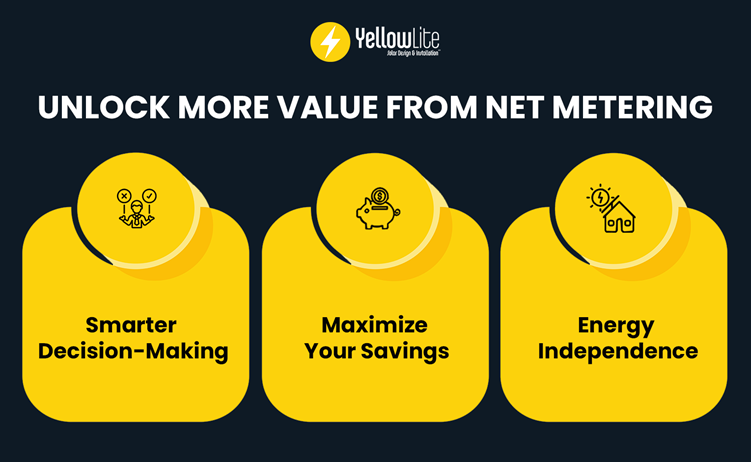
- Empowers Decision-Making: Knowing how solar net metering works helps you optimize energy usage patterns.
- Maximizes Savings: If your utility has peak demand charges, you can accrue more credits by storing your solar energy in a battery and then using it when energy rates are higher.
- Supports Energy Independence: With a deeper understanding, you can combine solar panels with battery storage to reduce grid dependency.
By effectively leveraging solar net metering in Ohio, you can enjoy lower energy costs and contribute to a more sustainable energy future.
Key Net Metering Trends for 2026
- Ohio Remains a Net Metering State
Ohio continues to be one of 33 states mandating net metering, ensuring homeowners can earn credits for excess solar energy sent back to the grid. - Ongoing Pushback from Utilities
Several Ohio utilities are actively attempting to roll back or eliminate net metering policies, however, these efforts have not been successful so far. - Shift Toward Time-of-Use (TOU) Rates
Utilities are increasingly adopting Time-of-Use (TOU) pricing models, where electricity costs vary based on demand and time of day—making solar + battery systems even more valuable.
Bonus 2026 Insights
- Grid Services Pay: Solar+storage earns for demand response in 15+ states.
State-by-State Net Metering Policies (2026 Update)
- Alaska
- Arkansas
- Colorado
- Connecticut
- Delaware
- Florida
- Georgia
- Hawaii
- Illinois
- Indiana
- Iowa
- Kansas
- Kentucky
- Louisiana
- Maine
- Maryland
- Massachusetts
- Michigan
- Minnesota
- Mississippi
- Missouri
- Montana
- Nebraska
- Nevada
- New Hampshire
- New Jersey
- New Mexico
- New York
- North Carolina
- North Dakota
- Ohio
- Oklahoma
- Oregon
- Pennsylvania
- Rhode Island
- South Carolina
- Vermont
- Virginia
- Washington
- West Virginia
- Wisconsin
- Wyoming
There are only three states left that do not offer solar net metering or other forms of compensation for excess solar production:
- Alabama
- South Dakota
- Tennessee
That means only some of the other 47 do offer net metering. Two others do not have compensation policies:
- Idaho
- Texas
In both states, utility companies offer net metering options directly.
While the majority of states offer net metering, the specifics vary. For example:
California: It now employs a Net Billing Tariff (NBT), a hybrid of net metering that compensates excess energy at wholesale rates.
Arizona and Utah: Follow similar net billing structures, encouraging energy self-consumption.
States like Alabama, South Dakota, and Tennessee still lack state-mandated compensation policies but allow for utility-specific programs.
A. States that have Net Metering Policy
- Many states offer traditional net metering, where credits are calculated based on retail prices.
- Modified Policy States like California have switched to net billing models to reflect the changing grid and utility requirements.
B. States Without State-Mandated Policies
- No Policy: Alabama, South Dakota, and Tennessee do not have compensation mandated by the state in solar energy.
- Utility-specific Programs States such as Idaho and Texas compensate specific utility companies and offer different options.
Key Variations in 2026
Policies emphasize hybrids amid solar boom (61% of US demand growth).
- California: Net Billing Tariff (NBT), wholesale exports.
- Arizona/Utah: Net billing pushes self-consumption + storage.
- Ohio: No 2026 changes; retail credits hold
- Trends: 15-min netting (NV), TOU exports, battery bonuses everywhere.
Factors to Consider for Net Metering Ohio
- Most utilities will allow your solar system to make up to 120% of your annual electric usage
- Excess solar energy at the end of the month is credited at your supply rate, which is lower than the full rate you pay for electricity. So in some cases, if your winter usage is higher and your summer usage is lower, it might make sense to size your solar system based on your summer usage.
- Not all utilities are required to offer net metering in Ohio. If you are with a Rural Co-op or a Municipal Utility, check with them to see what their net metering policy is.
For current and accurate policies, the database DSIRE can be a trusted source for up-to-date and detailed policies.
Future Outlook: Net Metering Ohio in 2026 and Beyond
Ohio's solar sector thrives in 2026, with net metering intact after PUCO's January reaffirmation of retail credits (up to 120% system cap). Key advances ahead:
Greater Accessibility
Falling costs (panels at $0.25/W) make solar viable for 80% more households. Ohio offers a property tax exemption for solar energy systems, allowing homeowners and businesses to avoid increased property taxes on the added system value.
Enhanced Grid Collaboration
Policies integrate solar+storage for virtual power plants, enabling exports during peak demand. AEP/Duke pilots AI-driven dynamic metering for real-time grid support.
Global Solar Boom
Over 60 GW-scale markets by 2026 drive net metering evolution worldwide. US hits 200 GW new installs, pressuring hybrids but locking Ohio's 1:1 credits via grandfathering.
Ohio-Specific Horizons
- Offset by SREC markets and battery bonuses.
- No major cuts (unlike KY/CA); act by mid-2026 to secure 20-year protections.
How YellowLite Can Help You Navigate Net Metering Ohio
Moving to solar energy involves navigating complicated policies and technological advances. YellowLite is a specialist in solar energy and an expert in providing customised solar solutions to meet your financial and energy needs.
- Custom-designed system designs: Solutions tailored based on your energy use and goals.
- Policies Expertise: Be informed of the latest net billing and net billing rules.
- Support Continually: From installation to routine maintenance, we will ensure that your system operates at its peak performance.
Why Choose YellowLite?
YellowLite stands out as a trusted partner for homeowners and businesses looking to make the most of net metering in Ohio. With years of expertise in the solar industry, YellowLite delivers tailored solutions that go beyond just installation. Here's why choosing YellowLite can transform your solar journey:
- Local Expertise with a Personal Touch
- Comprehensive Solar Solutions
- Advanced Technology
- Commitment to Long-Term Savings
- Customer-Centric Support
Net metering in Ohio is changing, which is the perfect moment to consider investing in solar energy. Start by cutting your energy costs and contributing to a more sustainable future.

FAQs.
Q1. What are the top-rated solar energy companies for net metering in residential areas?
National providers are well known for equipment quality, while Ohio homeowners often prioritize regional installers such as YellowLite for smoother coordination with First Energy, AEP, and Duke Energy net metering. Local expertise typically results in faster approvals and fewer utility delays, an area where established Ohio installers like YellowLite consistently stand out.
Q2. What is the process to switch to a solar provider that supports net metering
Homeowners don’t switch electricity providers. Instead, the process involves selecting a qualified installer, submitting an interconnection application, receiving utility approval (usually within 2–4 weeks), completing installation, and having the utility replace the meter with a bi-directional unit. Installers experienced with Ohio utilities can manage nearly all paperwork on the homeowner’s behalf.
Q3. Does Ohio allow the rollover of net metering credits?
Net metering allows excess solar energy sent to the grid to be credited at retail electricity rates (roughly $0.08-$0.10/kWh in Ohio). This significantly reduces monthly bills, improves long-term return on investment, and adds measurable home value. When paired with smart system sizing and optional battery storage, net metering also increases energy resilience.
Q4. How do solar net metering policies vary by state in the US?
Most U.S. states, including Ohio, offer net metering, though system size caps and credit structures vary. Some states have shifted to net billing at wholesale rates, while others rely on utility-specific programs. Because policies evolve, working with installers who actively track state and utility rules helps homeowners get the best return on their solar energy systems.
Q5. How do I qualify for solar net metering in Ohio?
Your system must be sized at or below 120% of your annual electricity usage. The installer submits the required interconnection documentation for approval by the utility. There is currently no statewide enrollment cap, making timing favorable. YellowLite also advises on battery options and long-term rate protection strategies.