


Fall comes quickly in Ohio. Days become shorter, clouds appear more often, and the sun begins setting before dinner. If you have solar panels, you may notice that the production numbers in your monitoring app no longer match the highs you saw during summer.
This can make it seem as though something is wrong with the system. In most cases, the change is simply seasonal. Solar panels continue producing electricity throughout Fall, but the amount changes with available daylight, cloud cover, shade, and roof conditions. Understanding these changes can help you judge your solar panel power output with greater confidence.
Why Solar Output Drops as Ohio Days Grow Shorter
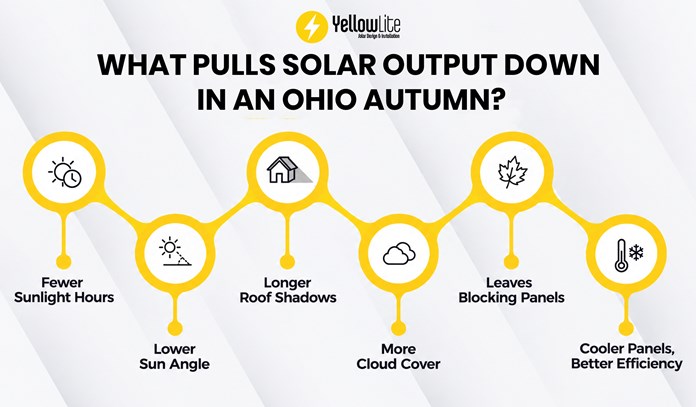
Solar panels need light, to produce electricity. As Ohio moves from summer into Fall, the system has fewer daylight hours. Sunrise comes later, sunset arrives earlier, and the total daily production window becomes smaller.
The sun also sits lower in the sky. This changes the angle at which sunlight reaches the panels and can cause trees, chimneys, and nearby buildings to cast longer shadows across the roof. A tree that caused little concern in July may begin shading part of the array in October.
These seasonal changes can affect solar panel power output in several ways:
- Panels begin producing later in the morning.
- Production slows earlier in the evening.
- A lower sun angle may reduce direct sunlight on the roof.
- Longer shadows can cover parts of the array.
- Cloudier days may reduce the strength of available sunlight.
A gradual decline in solar panel power output from summer into Fall is therefore normal. It does not mean the panels have lost their ability to generate electricity. They simply have less sunlight available over the course of the day.
This is why the average solar panel output should never be treated as a fixed daily number. Production changes by location, season, roof direction, panel angle, shade, weather, and system size. A realistic estimate should account for all these conditions.
Clouds, Cold, and Falling Leaves: Fall's Real Impact on Solar
Ohio Fall weather can shift from bright sunshine to thick clouds within a few hours. Despite this, Solar panels continue working under cloudy skies because they use indirect sunlight. However, their solar output falls when less light reaches the photovoltaic cells.
Solar panels often operate more efficiently in cooler conditions than they do on extremely hot roofs. The U.S. Department of Energy explains that actual performance depends on sunlight, panel temperature, equipment, and operating conditions.
A clear, cool October afternoon may therefore support strong solar panel power output while the sun is shining. The daily total may still be lower than in summer because the day itself is shorter.
|
Fall condition |
Effect on solar production |
|
Shorter days |
Fewer hours of electricity generation |
|
Lower sun angle |
Less direct sunlight on some roof areas |
|
Cloud cover |
Lower output while skies remain overcast |
|
Cooler air |
Efficient panel operation during sunny periods |
|
Longer shadows |
Temporary shading across the array |
|
Fallen leaves |
Reduced sunlight on covered areas |
When Lower Output Is Normal and When It Needs Attention
The most common mistake is comparing an October production total with the strongest month of summer. That comparison will nearly always make Fall performance look disappointing.
A better approach is to compare your system’s production with the average solar panel output expected for the same month and conditions. Solar systems are designed around annual sunlight patterns, so expected solar energy production naturally rises and falls throughout the year.
Start by reviewing three areas:
- Monthly production: Compare the actual kWh total with the expected Fall output, not the summer peak.
- Production pattern: One cloudy day says very little. A sharp and continuing decline during clear weather deserves more attention.
- Visible roof conditions: From the ground, check for heavy leaves, new shade, or obvious damage. Do not climb onto the roof or handle electrical equipment.
Your electric bill also needs context. Fall may bring lower solar production, but household electricity use can change at the same time. Lights stay on longer, heating equipment may begin running, and people often spend more time indoors.
The monitoring platform shows how much electricity the solar system produced. The utility bill shows how electricity was used and billed. Looking at both provides a clearer explanation than relying on either number alone.
If the monitoring system stops reporting, output suddenly falls, or production stays far below the seasonal estimate, contact a qualified solar professional. The issue may involve communication equipment, an inverter, a connection, or another system component.
Key Takeaways
Lower Fall solar production is usually just a seasonal change, not a sign that solar has stopped working. Shorter days, a lower sun angle, cloud cover, longer shadows, and falling leaves all influence how much sunlight reaches an Ohio roof. Cooler temperatures can help panels operate efficiently while sunlight is available.
The right way to judge performance is through monthly and annual expectations built around the home itself. YellowLite evaluates the roof, shade, location, electricity use, and expected year-round production when planning a residential solar system. Ohio weather changes with every season. Your solar plan should be prepared for all of them.

FAQs
1. Does solar panel power output decrease during Fall in Ohio?
Yes. Shorter days and a lower sun angle reduce the hours of usable sunlight, so daily output is usually lower than in summer.
2. What is the average solar panel output in the fall in Ohio?
There is no single average because output depends on system size, roof direction, shade, and weather. Compare your monthly results with a location-specific production estimate.
3. Why does solar panel output change so much from one Fall day to another?
Passing clouds, changing shade, and available daylight can cause noticeable daily swings. Monthly production gives a more reliable view than one day’s output.
4. Can falling leaves stop my solar panels from producing electricity?
A few leaves may have little effect, but heavy coverage can block sunlight and reduce production. Check for visible buildup safely from the ground.
5. How can I tell if lower Fall production is normal or a system problem?
Compare current production with the estimate for the same month. A sudden, lasting drop during clear weather or missing monitoring data may need professional inspection.