



Solar sounds promising on paper: lower bills, long-term savings, and more control over what you pay for electricity. But once quotes, financing, roof conditions, and payback periods enter the conversation, the decision becomes less straightforward.
So, are solar panels worth it for a Cincinnati home? This guide breaks down the costs, savings, ROI factors, and warning signs that matter. It will also help you understand when solar can deliver strong value and when the numbers may not work in your favor.
What Turns Solar Into a Strong Investment?
Solar becomes financially worthwhile when the value it creates over time is greater than the total amount spent on installation, financing, and maintenance. Every unit of solar energy used at home replaces electricity that would otherwise be purchased from the grid, allowing savings to build year after year.
However, the return is different for every property. Two similar homes can see very different results based on energy usage, roof exposure, system size, financing terms, and how long the homeowner plans to stay.
When asking are solar panels a good investment, look for these signs:
- Consistent annual energy production
- Noticeable reduction in grid electricity use
- A system sized around actual energy consumption
- Financing costs that preserve savings
- Reliable equipment and installation warranties
- Enough time in the home to reach the payback point
This is why solar should be evaluated through a property-specific estimate rather than a broad citywide average.
How to Calculate Solar Panel ROI
Solar return on investment compares the system’s total financial benefit with its total cost.
Solar ROI = (Lifetime savings − Total system cost) ÷ Total system cost × 100
Lifetime savings should include projected bill reductions, while total cost should include the purchase price, financing charges, expected maintenance, and equipment replacement.
A useful solar panel ROI Cincinnati calculation should account for:
- The previous 12 months of electricity usage
- The current utility rate
- Estimated annual solar production
- Financing interest and fees
- System degradation over time
- Verified incentives available in the installation year
- The number of years the homeowner expects to stay
- Cost of electricity increasing over time
The payback period is another valuable measure. It estimates how long accumulated savings may take to recover the project cost. The Department of Energy identifies payback time as an important way to assess solar savings.
What Shapes Solar Panel ROI in Cincinnati?
Roof shape, slope, nearby buildings, tree cover, and regional conditions can all affect rooftop potential. Roof age matters too, since installing a system shortly before roof replacement may create additional removal and reinstallation costs.
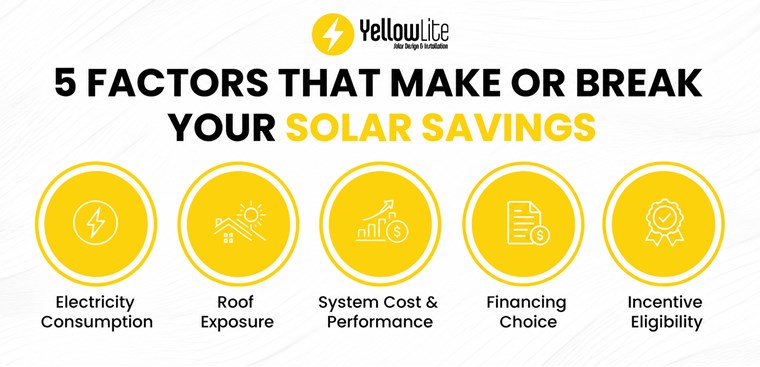
For a practical solar panel ROI Cincinnati estimate, focus on these five factors:
Electricity Consumption
Homes with higher electricity use may have more opportunity to replace grid purchases. System size should follow actual consumption.
Roof Exposure
Limited shade and usable roof space generally support stronger production. Direction, pitch, and condition also matter.
System Price and Production
The lowest proposal is not always the strongest investment. Compare the total price with projected annual output, equipment quality, warranties, and lifetime value.
Financing Structure
Cash avoids loan interest. Financing spreads the cost but can reduce returns through interest and added fees. Leases and power purchase agreements require a different comparison because the homeowner usually does not own the equipment.
Incentive Assumptions
Incentives affect ROI only when they genuinely apply. The federal Residential Clean Energy Credit is unavailable for residential clean-energy expenditures made after December 31, 2025. A 2026 estimate should not automatically deduct the former homeowner credit. Any local or utility benefit should be confirmed before inclusion.
How Financing Changes the Return
Financing can either support the investment or quietly weaken it.
A cash purchase creates the simplest calculation: compare the upfront cost with annual savings and expected lifetime production. A loan can preserve upfront funds, but interest and financing fees must be included in the ROI.
Leases and power purchase agreements should be reviewed for payment rates, annual escalators, contract length, and transfer terms. When asking are solar panels a good investment, examine the agreement as carefully as the equipment.
What Can Reduce Your Solar Returns?
Solar can create strong long-term value, but the return depends on how well the system fits the home and the homeowner’s financial situation. In some cases, installation may still be possible, but the payback period could be longer than expected.
Solar may deliver a weaker return when:
- Heavy roof shading reduces daily energy production
- An aging roof requires replacement before installation
- Electricity usage is low, leaving fewer grid costs to offset
- High-interest financing absorbs a large share of the projected savings
- The homeowner plans to move before reaching the payback point
- The system is oversized for the property’s actual energy needs
These factors do not automatically make solar a poor decision. They simply highlight the importance of reviewing production estimates, total project cost, financing terms, and expected ownership period before investing. Ultimately, are solar panels worth it depends on whether the system is designed around the property’s real energy and financial needs.
The Final Check: Does Solar Make Financial Sense for Your Home?
The value of a solar system cannot be measured through one utility bill. Energy production changes with the seasons, weather, household consumption, and local billing rules, so a more accurate assessment compares projected annual generation with the home’s total yearly electricity use. Homeowners should also review the complete financial picture, including system cost, financing charges, expected bill savings, warranty coverage, payback period, and how long they plan to stay in the property.
It is equally important to test the estimate against less favorable scenarios. Consider how the return may change if the system produces slightly less than projected, electricity rates rise more slowly, or the home is sold before the payback point. Battery storage should also be evaluated separately, as backup power and financial return serve different purposes.
So, are solar panels worth it? They can be when the roof is suitable, the system matches the household’s electricity use, and the total cost supports long-term savings. YellowLite can help Cincinnati homeowners turn these variables into a property-specific production and ROI estimate, making it easier to decide whether solar is the right investment for their home.

FAQs
1. Are solar panels worth it for most homeowners?
Solar panels can be worth it when the roof receives enough sunlight, electricity usage is consistent, and the projected savings exceed the total installation and financing costs.
2. Are solar panels a good investment in Cincinnati?
They can be a strong investment when the system is properly sized for the home, financing costs are reasonable, and the homeowner plans to stay long enough to reach payback.
3. How is solar panel ROI calculated?
Solar panel ROI compares lifetime energy savings with the total system cost, including installation, financing charges, maintenance, and any future equipment replacement.
4. What is considered a good solar payback period?
A good payback period is one that allows the homeowner to recover the investment well before the system reaches the end of its expected operating life.
5. What can reduce solar panel ROI?
Heavy shading, low electricity usage, an aging roof, financing fees, oversized systems, and moving before breakeven can all reduce the expected return.
6. Does financing affect whether solar panels are worth it?
Yes. Interest rates, loan fees, repayment terms, and lease escalators can reduce total savings, so financing costs should always be included in the ROI calculation.
6. How can I estimate solar panel ROI for my Cincinnati home?
Review your annual electricity use, roof exposure, system cost, projected production, financing terms, and expected ownership period. YellowLite can provide a property-specific estimate based on these factors.