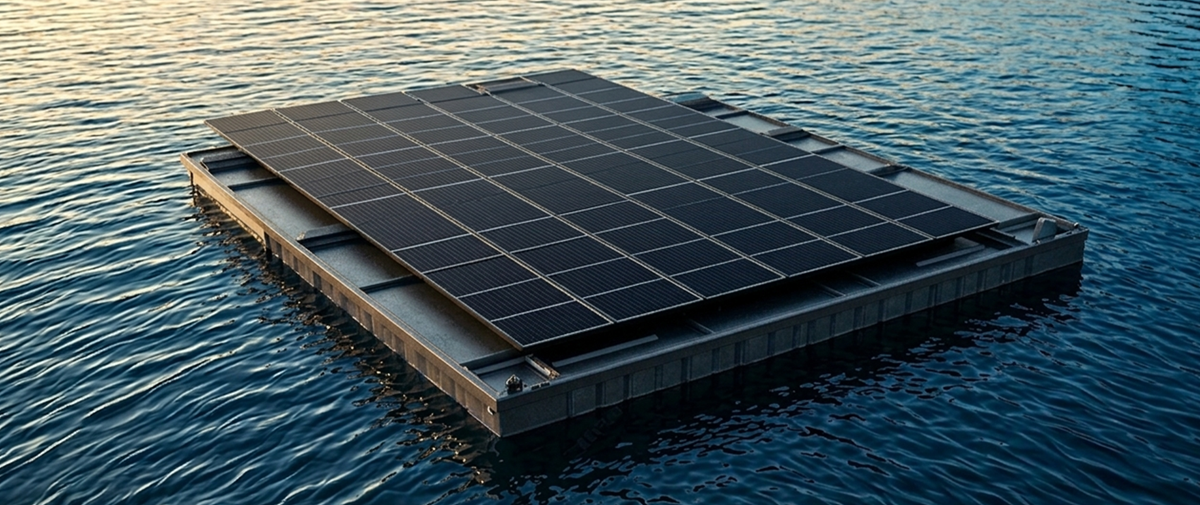


What if the next big leap in solar energy wasn't on your roof, but on the water? As land grows scarcer and energy demand rises, engineers are finding creative ways to generate more power without paving over fields and farmland. Enter floating solar: one of the most exciting innovations in renewable energy today.
Floating solar panels, also called floating photovoltaic (FPV) systems, sit on buoyant platforms on reservoirs, lakes, and ponds instead of rooftops or ground. Countries like China, India, and Japan have already deployed massive floating solar farms, and the U.S. is catching up fast.
Key Overview
- Floating solar is a growing and innovative technology best suited for large-scale energy projects.
- It offers efficiency gains of 5-15% over traditional ground-mount systems, thanks to the natural cooling effect of water.
- For Ohio homeowners, rooftop solar remains the most accessible, practical, and cost-effective solar solution.
- YellowLite can help you explore the best solar option for your home, budget, and energy goals.
|
Quick Answer: What Is Floating Solar? |
What Are Floating Solar Panels?
Floating solar panels are photovoltaic (PV) systems mounted on waterproof, buoyant platforms engineered to sit on calm water bodies. Like any solar system, they capture sunlight and convert it to electricity; the difference is the platform beneath them. Instead of a rooftop rack or ground mount, panels rest on modular pontoon structures made from UV-resistant, high-density polyethylene. Installations range from small pilot projects to utility-scale farms covering hundreds of acres of water.
How Do Floating Solar Panels Work?
Floating solar follows the same electrical principles as any PV system. Panels convert sunlight to DC power, inverters convert it to AC, and it flows to the grid. What's unique is the physical setup:
- Floating platforms anchor to the water body floor via cables and mooring lines
- All wiring and electrical components are waterproofed for a marine environment
- Cables run underwater or along the surface to an onshore inverter station
Where Are Floating Solar Farms Used?
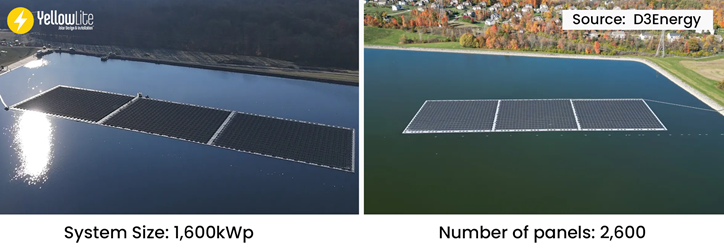
Floating solar works best on calm, accessible water bodies: reservoirs, irrigation ponds, hydroelectric dam lakes, and industrial wastewater ponds. China leads globally with multi-hundred-megawatt installations; India, South Korea, and Japan have made major investments too. In the U.S., projects are expanding in California, New Jersey, and Massachusetts as states pursue aggressive clean energy targets. There’s also a floating solar array in Ohio at the Delaware County water plant.
What Are the Benefits of Floating Solar Panels?
- Land conservation — panels use water surfaces, freeing land for agriculture and housing
- Higher efficiency — water cools panels naturally, boosting output 5–15% vs. ground-mount
- Reduced evaporation — shade from panels conserves reservoir water in drought-prone areas
- Less dust — fewer soiling losses mean lower maintenance and more consistent output
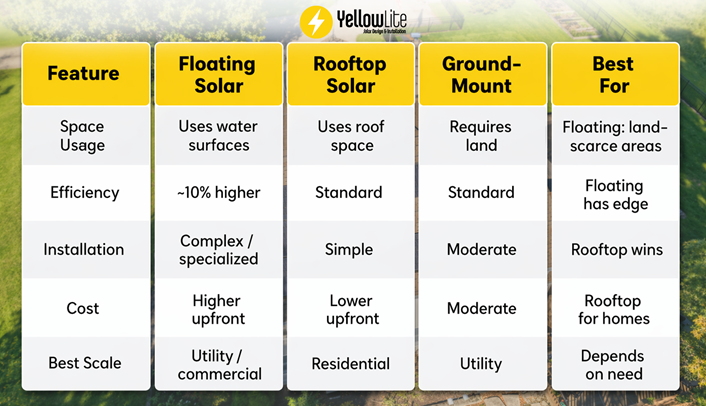
Floating Solar vs. Rooftop Solar: A Quick Comparison
Are Floating Solar Panels the Future of Renewable Energy?
Floating solar is one of the fastest-growing segments in clean energy, global capacity has jumped from a few megawatts a decade ago to around 3 gigawatts today. Governments worldwide are backing it as a way to hit renewable targets without using land that could be better used as farmland or clearing wild lands. As costs fall and engineering matures, floating solar will play a growing role in the global energy mix. For large-scale projects near water, it's already a compelling option.
Can Floating Solar Work in Ohio?
Ohio has thousands of reservoirs, ponds, and water treatment facilities, but floating solar here is realistically a large-scale play. It makes sense for municipal utilities, industrial facilities with retention ponds, and agricultural operations. For most Ohio homeowners, rooftop solar is far more practical and immediately accessible. Ohio's net metering policy lets homeowners earn bill credits for excess energy, and commercial, government, and non-profit entities can take advantage of a federal tax credit that can offset 30-40% of the total project cost.
Why Choose YellowLite?
At YellowLite, we've been helping Ohio homeowners and businesses go solar for over a decade. We offer customized rooftop solar solutions tailored to your home, budget, and energy goals, with honest pricing and long-term support built in. Whether you're just exploring or ready to commit, we'll help you make a confident, informed decision.

Frequently Asked Questions
Q1. What is floating solar used for?
Floating solar is primarily used for large-scale energy generation on reservoirs, lakes, and water treatment facilities. It helps utilities and municipalities generate clean electricity without using valuable land.
Q2. Are floating solar panels more efficient?
Yes, by about 5–15%. The cooling effect of water prevents overheating, which is one of the main causes of efficiency loss in traditional solar panels.
Q3. How long do floating solar panels last?
Floating solar systems are designed to last 25–30 years, similar to rooftop panels. Specialized waterproof and UV-resistant materials are used to withstand the marine environment.
Q4. Is floating solar expensive?
Yes, floating solar costs more than rooftop or ground-mount solar due to specialized materials, anchoring systems, and complex installation. It is primarily economical at large commercial or utility scale.
Q5. Can homeowners install floating solar panels?
In most cases, no. Floating solar requires large bodies of water and specialized infrastructure. Rooftop solar remains the most practical, cost-effective option for Ohio homeowners.
Q6. Which countries are leading in floating solar?
China leads globally in floating solar capacity, followed by Japan, South Korea, and India. The U.S. is growing rapidly, with projects in California, New Jersey, and other states.