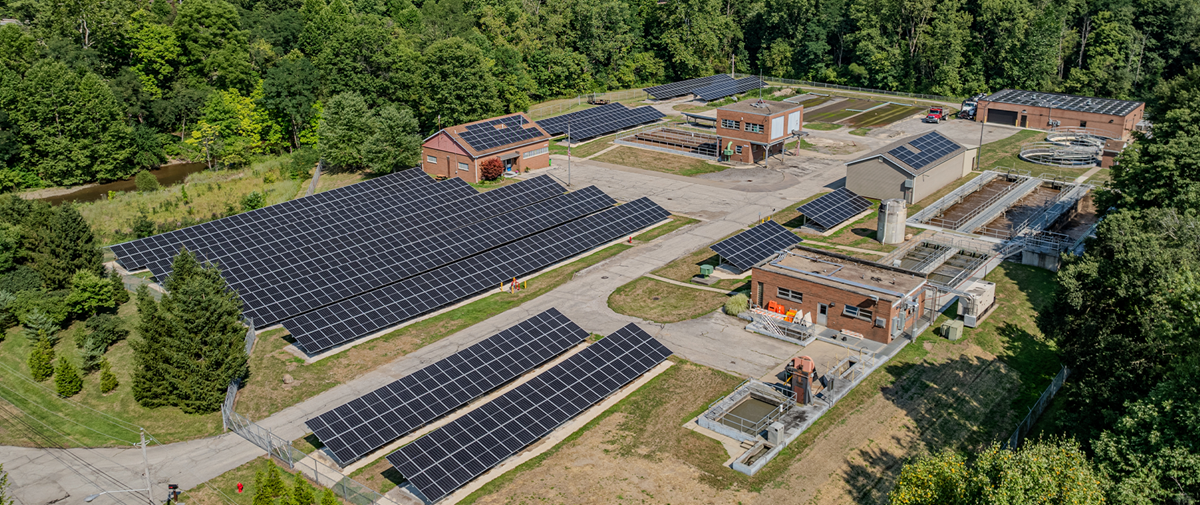


If you’ve stared at your energy bill thinking, 'Is this for real?' You’re not alone. Energy costs can eat your budget faster. Commercial solar installers are your bill’s worst nightmare. They’ll set you up with a solar system that fits your building, so you can predict energy costs, cut your monthly bills, and keep more cash in your business for the long haul.
Whether you operate a warehouse, factory, or office, solar energy is no longer a futuristic concept. It’s a smart move you can make now. In this guide, I’ll show how professionals make solar pay for your business and explain why choosing the right crew is a game-changer.
Key Overview
- Commercial solar installers help businesses reduce energy costs, improve operational efficiency, and achieve long-term savings through customized solar systems tailored to specific energy consumption needs.
- By leveraging incentives like tax credits, MACRS depreciation, commercial solar installers significantly lower upfront investment costs while maximizing ROI and financial performance over time.
- Data-driven commercial solar solutions enable businesses to reduce demand charges, stabilize electricity expenses, and enhance budgeting accuracy across multi-location operations and facilities.
- Partnering with experienced commercial solar installers ensures optimized system design, regulatory compliance, and high-performance equipment that delivers consistent energy output and long-term operational reliability.
- Commercial solar adoption strengthens ESG performance, boosts property value, and positions businesses as sustainability leaders while unlocking competitive advantages in procurement, branding, and investor relations.
What Do Commercial Solar Installers Actually Do?
A professional commercial solar installer manages your entire project lifecycle, not just the panels on your roof. Here's what that includes:
- Site Assessment: Evaluate roof structure, orientation, shading, and energy consumption patterns.
- Custom System Design: Engineer a system sized precisely for your facility's energy load.
- Permitting & Compliance: Handle all local, state, and utility permits so you don't have to.
- Professional Installation: Deploy and install commercial-grade equipment with certified electricians and engineers.
- Incentive Guidance: Identify and educate about available tax credits, depreciation, and financing options.
- Monitoring & Maintenance: Provide long-term performance tracking to protect your investment.
In short, great commercial solar installers are your end-to-end energy partner, not just a contractor.
How Commercial Solar Improves Your Bottom Line
The financial case for commercial solar is strong and multi-dimensional. Here are the key ways it impacts profitability:
Reduced Energy Bills
Commercial solar systems directly offset your grid electricity consumption. Businesses typically see significant reductions in monthly utility costs, with savings compounding over a 25–30 year system lifespan.
MACRS Depreciation
MACRS (Modified Accelerated Cost Recovery System) depreciation lets you depreciate a solar asset over just 5 years; the effective upfront cost drops considerably. State-level incentives and utility rebates may reduce costs further.
Demand Charge Reduction
For commercial and industrial customers, demand charges (based on peak power draw) can account for 30–50% of a utility bill. Solar generation during peak hours can help reduce these charges, one of the most overlooked commercial solar savings opportunities.
Increased Property Value
Commercial properties with owned solar systems command higher valuations. A solar installation signals lower operating costs to potential buyers and tenants, making it a tangible asset on your balance sheet.
Improved ESG Score & Brand Reputation
Sustainability performance directly affects procurement eligibility, investor relations, and customer perception. Commercial solar strengthens your environmental, social, and governance (ESG) profile, increasingly required for enterprise contracts and institutional funding.
Commercial Solar ROI: What Businesses Can Realistically Expect
While every project is different, industry data provides reliable benchmarks for commercial solar performance:
- Typical Payback Period: Most commercial solar systems pay back their full investment in 4–7 years, depending on system size, energy rates, and available incentives.
- 25-Year Savings: Over the system's operational life, businesses commonly achieve 50–80% in cumulative energy cost reductions vs. continuing with grid power.
- Commercial Solar ROI: Internal rates of return (IRR) for commercial solar projects typically range from 10–20%, outperforming many traditional capital investments.
- Financing Options: With $0 down solar loans, leases, or power purchase agreements (PPAs), many businesses achieve positive cash flow from month one with no large upfront outlay.
These figures make commercial solar one of the highest-confidence infrastructure investments available to facility managers and CFOs today.

Why Choosing Experienced Commercial Solar Installers Matters
Not all solar contractors are equipped for commercial-scale projects. Here's why experience and specialization are non-negotiable:
- Engineering accuracy ensures your system is sized correctly, avoiding under- or over-production.
- Safety & code compliance protects against liability and ensures utility interconnection approval.
- Optimal panel placement maximizes generation efficiency across seasons and roof configurations.
- Commercial-grade equipment (higher wattage panels, industrial inverters) delivers better long-term performance.
- End-to-end project management keeps timelines on track and minimizes operational disruption.
- Warranty and service continuity mean your investment is protected years after installation.
Partnering with inexperienced contractors risks underperforming systems, failed inspections, and unclaimed incentives, all of which erode your ROI.
How YellowLite Helps Businesses Lower Operating Costs
YellowLite is a trusted commercial solar installation company with deep expertise in designing, installing, and maintaining large-scale solar systems for businesses across the Midwest and beyond. Here's what sets YellowLite apart:
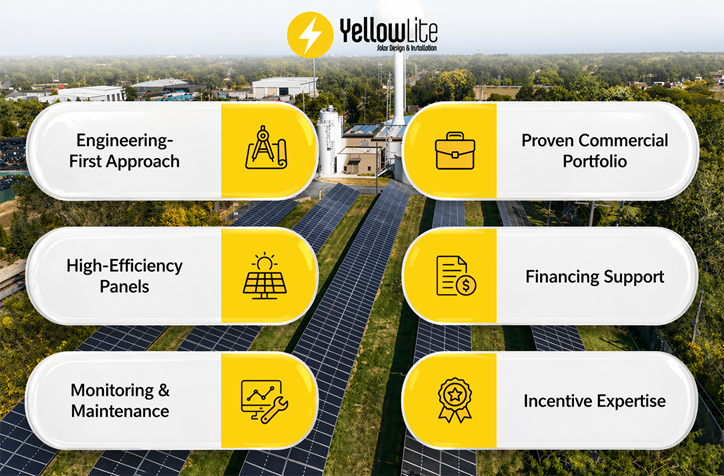
When you work with YellowLite as your commercial solar installers, you're not just buying equipment, you're gaining a long-term energy partner committed to your financial performance.
FAQ
1. Are commercial solar installers worth the investment?
Yes, for most businesses with moderate-to-high energy bills. With payback periods of 4–7 years and systems lasting 25–30 years, the long-term savings significantly exceed the upfront cost. Add in federal tax credits and rising energy costs, and the financial case is compelling.
2. How long is the payback period for commercial solar?
Most commercial solar systems pay back their investment in 4–7 years, though this varies based on system size, local utility rates, and the incentives applied. Financing options can also shift the equation, allowing businesses to see positive cash flow immediately.
3. Can commercial solar reduce operating costs?
Absolutely. Commercial solar reduces direct electricity costs and demand charges, two of the largest components of commercial utility bills. Over 25 years, businesses have commonly reduced energy expenditure by 50–80% compared to continued grid reliance.
4. What incentives are available for commercial solar?
Key incentives include the Federal Investment Tax Credit (ITC), MACRS 5-year accelerated depreciation, , utility rebates, and net metering programs. An experienced commercial solar installer will identify and walk you through all applicable incentives on your behalf.
5. How do I pick the best commercial solar installers?
Look for installers with verified commercial project experience, licensed engineers on staff, strong references from comparable business installations, and a clear process for permitting and incentive management. YellowLite checks all these boxes, contact us to learn more.
6. What is the difference between commercial solar and residential solar?
Commercial solar systems are larger, require more complex engineering, and involve different utility interconnection processes. They also qualify for different, often more favorable incentive structures, including MACRS depreciation, which is not available to residential buyers.