

Ever notice how church budgets seem to disappear faster than donuts after Sunday service? Those electric bills are sneaky. The costs pile up from heating the sanctuary, lighting the fellowship hall, and keeping the coffee brewing for every meeting. We’re talking thousands, sometimes enough to make you pray for a miracle during offering time.
Solar panels aren’t just for tech bros or that one neighbor who brags about their electric bill. Churches can get in on the action too. Solar lets you make your own clean energy, slash those monthly bills, and keep more cash for what really matters, like youth trips, food drives, or finally replacing that ancient AC unit.
Curious how it all works? This guide breaks down the basics, shows you what kind of savings are actually possible, helps you make sense of nonprofit incentives, and gives you the inside scoop on picking a solar installer you can trust.
Why Are So Many Churches Turning to Solar?
Faith communities across the country are embracing solar panels for churches for a growing set of reasons, financial, environmental, and mission-driven:
1. Rising Electricity Costs
Commercial utility rates have climbed steadily and show no sign of slowing. Churches with aging HVAC systems and large square footage feel this acutely.
2. Large Buildings, High Daytime Use
Churches consume significant energy during daytime hours, exactly when solar generation peaks. The match between solar production and church energy patterns is a natural one.
3. Stewardship of Resources
Many faith traditions embrace care for creation and responsible use of resources. Solar is a tangible expression of that commitment.
4. Long-Term Financial Stability
Reducing overhead costs strengthens a church's financial foundation, making it more resilient and mission-focused.
5. Community Leadership
A solar installation sends a visible message to the congregation, neighbors, and wider community that this church leads by example.
How Do Solar Panels Reduce a Church's Energy Use?
Solar panels don't eliminate your utility connection; they offset it. Here's how that works in practice for a typical church facility:
- Daytime Offset: Panels generate electricity during daylight hours, directly reducing how much power you draw from the grid during services, office hours, and weekday programs.
- Lower HVAC and Lighting Costs: Heating, cooling, and lighting are the largest energy consumers in most church buildings. Solar for churches directly reduces the cost of running these systems.
- Protection from Rate Increases: Once installed, your solar generation cost is fixed. Every time utility rates rise, your savings grow proportionally.
- Powering the Whole Campus: From the main sanctuary to classrooms, fellowship halls, and administrative offices, a well-sized system can cover energy use across your entire facility.
Net metering programs, available in many states, allow churches to earn credits for excess solar energy sent back to the grid, further reducing net electricity costs.
How Much Money Can Solar Panels Save a Church?
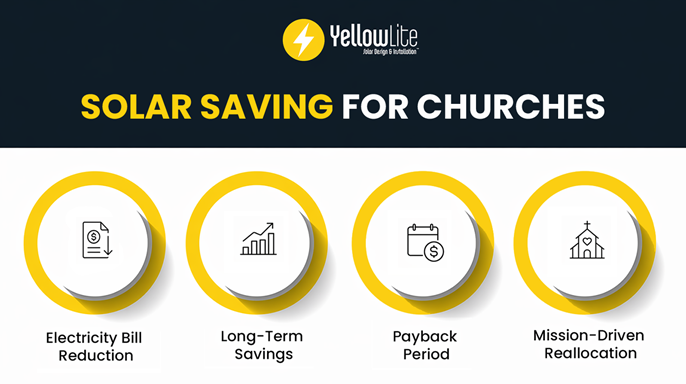
Church solar savings vary based on system size, energy consumption, local utility rates, and available incentives. That said, realistic benchmarks are available:
What Incentives and Financing Options Are Available for Churches?
There are several financial vehicles that help make a church solar dream into reality:
- Direct Pay: Currently there is a federal tax credit that can offset up to 30-40% of a solar project project cost. Churches and non-profits can apply to receive a direct payment for this amount after completion of the solar energy system.
- Power Purchase Agreements (PPAs): A third-party developer installs and owns the solar system on your property. The church buys the electricity generated at a reduced, fixed rate. No upfront cost, immediate savings.
- Solar Leases: Similar to a PPA, the church leases the system and pays a fixed monthly amount, typically lower than current utility bills.
- Net-Metering: Many utility companies offer net metering, where solar credits help reduce your monthly electric bill.
- Grants & Donations: Some faith communities raise dedicated funds or apply for energy-efficiency grants specifically to fund solar installations. YellowLite can help identify opportunities in your area.
A knowledgeable solar partner will model each financing option side-by-side so your church board can make an informed, confident decision.
Why Solar Aligns Naturally with Faith-Based Values
Solar installation for churches reflects core faith-based values by promoting stewardship of resources and care for the environment. It reduces environmental impact, supports long-term financial stability, and protects key programs and staff. At the same time, it positions the church as a sustainability leader and serves as a visible symbol of its values, inspiring the wider community and congregation to embrace renewable energy.
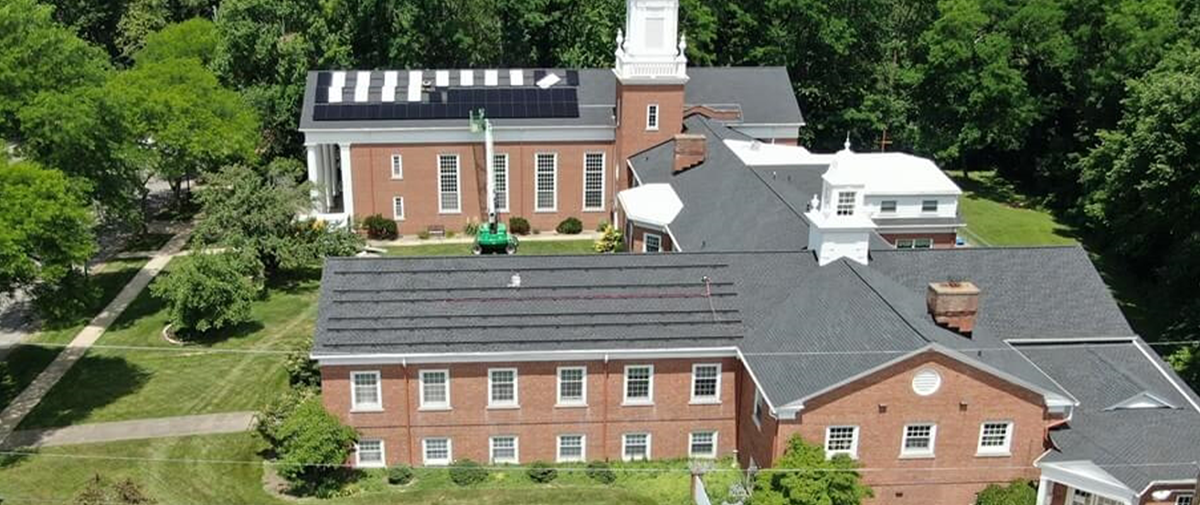
View our past installations at Olmsted Falls, Ohio and WSUUC, Rocky River
What Should a Church Consider Before Installing Solar?
Before moving forward with a solar installation, it helps to assess your facility through a practical checklist. A good installer will review all of these, but it's worth understanding them in advance:
- Roof Condition & Age: Solar panels have 25–30 year lifespans. If your roof needs replacement in the next 5–10 years, it's worth addressing that first or coordinating both projects.
- Roof Orientation & Tilt: South-facing roofs at a moderate pitch produce the most solar energy in the Northern Hemisphere. East/west-facing roofs can still work effectively.
- Shading: Trees, neighboring buildings, or steeples that cast shadows on roof sections can reduce system output. A site assessment identifies and accounts for shading issues.
- Energy Usage Patterns: Understanding when and how your church uses electricity helps right-size the system for maximum offset and savings.
- Electrical System Age: Older electrical panels may need upgrades to support a solar installation, typically a minor cost that's factored into the overall project.
- Ground Mount & Carport Options: If the roof isn't ideal, ground-mounted systems or solar carports over parking lots can be excellent alternatives and carports provide added shade for parishioners.
Why Churches Choose YellowLite as Their Solar Partner
YellowLite has partnered with churches and nonprofits across the region, including West Shore Unitarian Universalist Church, Unitarian Universalist Church of Kent, and Olmsted Community Church to deliver tailored solar solutions that align with their unique needs. With deep experience in faith-based institutions, YellowLite offers transparent financial modeling, high-efficiency equipment, and an engineering-first approach to ensure long-term performance. From initial assessment to ongoing monitoring and support, the focus remains on making solar a simple, reliable, and high-impact investment for both the church and its community.
FAQ
Q1. Are solar panels a good investment for churches?
Yes, for most churches with consistent energy bills and adequate roof or ground space. Solar reduces operating costs, protects against rate increases, and generates long-term savings that can be redirected to mission. Flexible financing means many churches can go solar with little or no upfront cost.
Q2. How much can solar panels reduce a church's electricity bill?
Most churches see a 20–70% reduction in electricity costs after installing solar. The exact amount depends on system size, local utility rates, roof orientation, and how much of the church's energy load the system is designed to cover.
Q3. How do nonprofit churches take advantage of solar incentives?
Nonprofits cannot directly claim the federal ITC, but they can get a direct payment for this amount, which can help offset 30–40% of the cost of going solar. Power Purchase Agreements, solar leases, or ownership structures with tax-equity financing are also available. State rebates and utility incentives often apply directly to nonprofits as well.
Q4. What size solar system does a church need?
System size depends on the church's total electricity consumption, building size, and how much of the energy load the congregation wants to offset. A solar provider will analyze 12 months of utility bills and conduct a site assessment to recommend the right system size.
Q5. How long does it take for a church to start seeing savings from solar energy?
In most cases, savings begin the moment the system turns on, your first utility bill after activation will reflect the reduction. Full payback of the system investment typically occurs within 5–10 years for churches using nonprofit-appropriate financing structures.
Q6. Can solar panels work on an older church building?
Often yes, but roof condition and electrical panel capacity need to be assessed first. If the roof needs replacement or upgrades are required, these can typically be incorporated into the overall project plan. Ground-mount and carport installations are also viable alternatives.