



Energy costs are climbing, the grid is becoming less reliable, and homeowners in 2026 are searching for smarter solutions to manage their long-term energy use. In this landscape, solar panels for home have shifted from an optional upgrade to a smart, future-ready investment. Today’s high-efficiency residential solar panels deliver stronger output, longer warranties, and faster payback than ever before.
A modern solar energy system gives homeowners control, lowering bills, stabilizing energy costs, and increasing energy independence. Companies like YellowLite are helping thousands of families make the switch with customized systems built for long-term performance. This guide breaks down the costs, savings, how solar works, and why 2026 is the ideal time to go solar.
Why Solar Panels for Home Are a Smart Investment in 2026
The past decade has brought significant improvements in solar technology. Panels are more efficient and electric rates have gone up making solar panels for home a smarter investment than ever. Costs have fallen as global adoption increases, while panel efficiency has risen, allowing homeowners to generate more energy from the same roof area.
In 2026, more homeowners are turning to solar energy to protect themselves from rising electricity costs. Utility rates have increased steadily and are expected to continue climbing. Solar helps lock in predictable, low-cost energy for decades.
Local incentives, net-metering programs, and performance-based rebates in many regions also help improve financial returns. With trusted installers like YellowLite designing optimized systems for long-term savings, homeowners can feel confident they’re making a sound financial decision.
How a Residential Solar Energy System Works
A solar energy system is simple, efficient, and built to last 25–30 years.
- Solar Panels: Capture sunlight and convert it into DC power.
- Inverter: Converts DC power into AC electricity for your home.
- Net Metering (in eligible areas): Extra energy flows back to the grid for bill credits.
- Optional Battery: Stores extra energy for night use or backup protection.
With solar panels for home use, your roof becomes a clean, reliable energy source. Thanks to modern technology, systems work in all seasons, even during cloudy or cold weather. YellowLite installs high-performance equipment designed to maximize production.
Costs of Residential Solar Panels in 2026
As of 2026, the cost of residential solar panels varies based on roof design, shading, equipment type, and system size. Typical ranges include:
- 4–6 kW system: $13,000-$16,000
- 7–10 kW system: $16,000-$22,000
- 11–15 kW system: $22,000-$32,000
Battery systems add approximately $18,000-$22,000 per battery depending on size and brand.
Despite upfront costs, solar remains one of the highest-value home improvements. Most homeowners recover their investment within 6–10 years and enjoy decades of ongoing savings. A well-designed solar energy system can return over $150,000 in lifetime energy savings.
YellowLite’s tailored design approach ensures homeowners don’t overpay for unnecessary capacity and instead get the ideal system size for maximum long-term ROI.
Financial Benefits: Savings, Payback & ROI
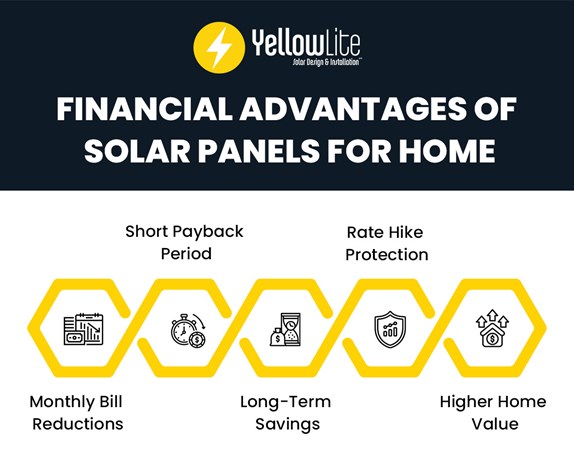
The financial advantages of solar panels for home are significant and long-lasting:
- Major Monthly Bill Reductions: Many households cut bills by 60–100%.
- Short Payback Period: Most systems pay for themselves within 6–10 years.
- Long-Term Savings: Homeowners typically save about $150,000 over 25 years.
- Protection From Rate Hikes: Solar shields you from unpredictable utility increases.
- Higher Home Value: Homes with residential solar panels often sell for 3–5% more.
Net-metering, local rebates, and utility programs in many regions further enhance the value. By working with industry experts like YellowLite, homeowners receive accurate savings projections and system designs optimized for best financial outcomes.
Types of Solar Panels for Home Use
When selecting solar panels for home use, homeowners typically choose from three main varieties:
Monocrystalline Panels
- Highest efficiency
- Sleek black look
- Ideal for homes with limited roof space
Most residential installations benefit from monocrystalline panels due to their superior energy production and longer warranties.
Choosing the Right Solar Panel System for Your House
Choosing the perfect solar panel system for house use involves balancing energy needs, roof design, and long-term goals. Consider:
- Roof Orientation & Space: South-facing roofs are ideal, but east/west also perform well.
- Electricity Usage: Past bills help determine optimal system size.
- Future Needs: EVs, heat pumps, or home expansions may increase energy demand.
- Budget: Decide between a lower upfront cost and maximum lifetime savings.
- Installer Expertise: Choose certified professionals with strong warranties.
YellowLite takes care of detailed on-site evaluations, shading analysis, and customized system sizing to ensure your home gets the best possible design, neither undersized nor oversized.
New to solar? This solar panel guide breaks down installation costs in the simplest way possible.
Common Myths About Solar Panels for Home Use
Several misconceptions still hold homeowners back:
- “Solar panels only work in hot, sunny states.”
Thanks to recent improvements in solar technology, solar panels just need ambient daylight to make energy. Obviously, they’ll make more energy on a sunny day, but the bump from ambient daylight is enough to make solar make sense in Ohio. - “Solar panels stop working in winter.”
Panels generate energy year-round; cold temperatures can even improve efficiency. - “Solar panels need constant maintenance.”
Systems require minimal upkeep and occasional cleaning. - “Batteries are mandatory.”
Batteries are optional and can be added later if needed.
YellowLite educates homeowners thoroughly during consultations, ensuring decisions are based on facts, not myths.
Conclusion
In 2026, solar panels for home offer one of the best financial returns and long-term protections available to homeowners. With rising utility prices, increasing climate-related weather events, and more efficient technology, residential solar has become a smart investment, not just a sustainable one.
If you’re considering residential solar panels, now is the ideal time to explore your options. YellowLite specializes in designing high-performance, long-lasting systems tailored to your home and budget.

FAQs
1. How do I schedule a home solar panel installation consultation?
You can book a consultation online with a trusted installer like YellowLite, who reviews your roof, energy usage, and recommends the right solar panels for home.
2. How can I get a free quote for home solar panel installation?
Request a free quote by submitting your home details. YellowLite provides accurate sizing, pricing, and savings estimates for your residential solar panels installation.
3. How do I finance a solar panel system for my house with no upfront cost?
You can finance solar panels for home use through solar loans or payment plans. YellowLite partners with lenders offering low-payment, zero-upfront options.
4. How long does it take to install solar panels for a home?
Installation typically takes 1–3 days. YellowLite manages design, permits, and inspections for a smooth, timely solar panel system for house installation which typically take 90-120 days for the entire process.
5. Do solar panels increase the value of my house?
Yes, residential solar panels can boost home value 3–5%. Buyers prefer homes with lower energy bills and long-term savings from a quality solar system.